
Adrian Savage: Inside the future of email deliverability (Episode 14)
Is your list ruining your email deliverability? In this episode of Data Beats Opinion, learn how to make sure new leads actually see your emails.

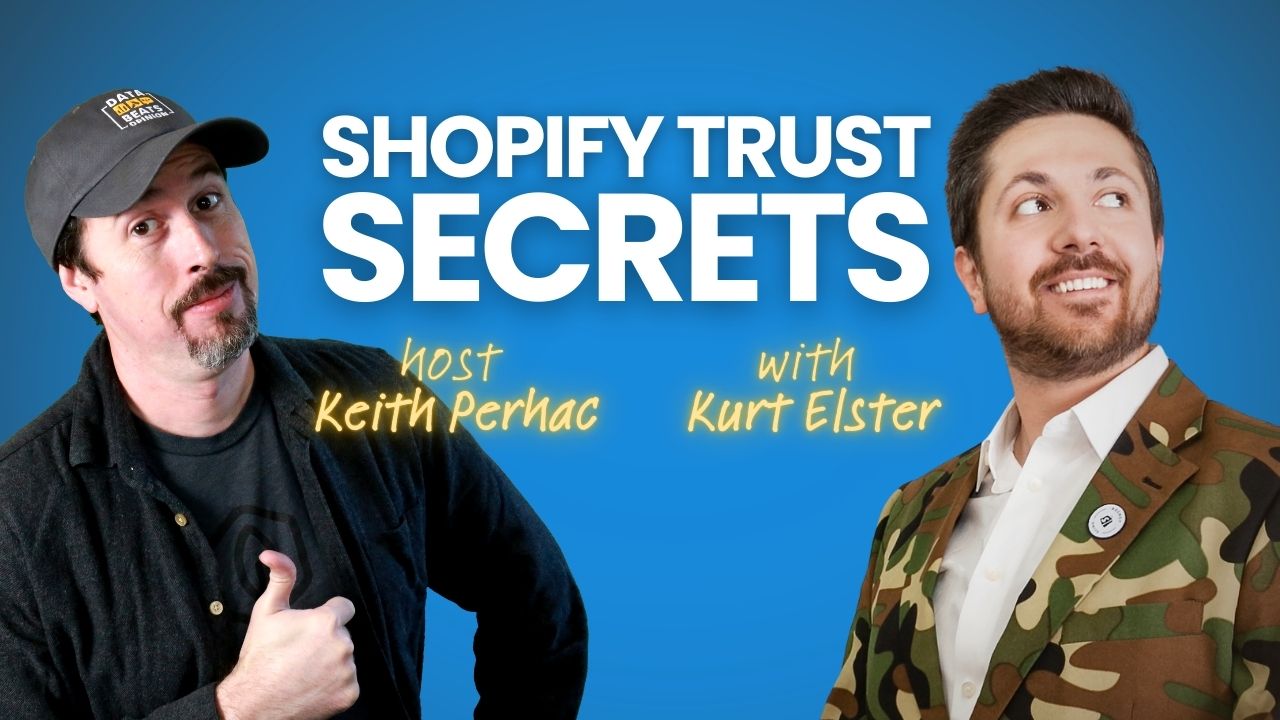
Something weird is happening in e-commerce. AI is causing your audience to second guess the authenticity of your testimonials, photos and claims. Gen Z thinks your professional marketing is cringe. And for every real visitor to your store, there are 10 bots crawling your site.
What’s going on?!?
In this episode of Data Beats Opinion, SegMetrics founder Keith Perhac sits down with Kurt Elster — Shopify expert, host of The Unofficial Shopify Podcast, and founder of Ethercycle — to uncover why authenticity beats perfection in the age of AI distrust.
If you’re wondering why your conversions are dropping despite having a “perfect” store, this episode reveals the counterintuitive strategies that actually work when customers assume everything online is fake.
Watch the full episode on YouTube →
Kurt Elster is the founder of Ethercycle, a Shopify Plus consultancy, and host of The Unofficial Shopify Podcast with over 2 million downloads. Kurt helps high-revenue merchants like HOONIGAN and Jay Leno’s Garage optimize conversions and scale profitably. Known for his no-nonsense approach to e-commerce, Kurt specializes in turning beautiful but underperforming stores into revenue-generating machines that prioritize authenticity over polish.
Connect with Kurt at KurtElster.com or Ethercycle.
[00:00] Meet Kurt [01:52] The giant shifts in e-commerce before and after the pandemic [04:57] How AI is driving another shift in e-commerce [06:48] The power of long-form, founder-led video [07:26] What does authenticity look like today? [09:55] What level of quality is right for you? [11:15] Advanced ad strategy: Mirroring [13:07] How to use generative AI to drive e-commerce results [15:39] What happens to your store when people shop via AI, not your site? [20:20] How much effort should you put into SEO and AEO right now? [23:55] Laughing about AI’s quirks and hallucinations [24:53] How to use AI for ideation [26:22] Behind the 10x surge in bots on e-commerce sites [30:08] Automated e-commerce fraud [32:33] Pixel fraud [34:53] More shady advertising stories [36:41] The impact of AI-generated UGI [41:03] Do people care if e-com product descriptions are AI-generated? [43:47] How attention mapping can help improve your engagement and conversions [46:39] How to find out where your customers are REALLY coming from? [51:33] How to find Kurt Elster
Data Beats Opinion is SegMetrics’ monthly podcast exploring what’s actually working in growth and marketing today. Host Keith Perhac, founder of SegMetrics, sits down with domain experts to uncover practical strategies you can implement — not just theory.
Want to see what is and isn’t working across all your growth channels — including outbound sales, paid ads, deal pipelines and content marketing? SegMetrics provides full-funnel, cross-platform, lifetime attribution so you can see what’s actually driving revenue, not just clicks. And you can test-drive it for free.
Start your 14-day free trial today.
Data beats opinion. Growth beats guesswork. 🚀
Keith Perhac: Something weird is happening in e-commerce. Gen Z thinks professionally shot videos are cringe. Beautiful websites with perfect design are tanking, and that expensive production value you invested in is actually hurting your conversions. To find out what’s going on, I invited Kurt Elster, e-comm and Shopify expert, onto the Data Beats Opinion podcast.
Keith Perhac: We dug into these e-comm trends and how AI is creating a trust crisis in online shopping and the counterintuitive strategies that actually work when everyone assumes that everything is fake. Let’s start the show.
Keith Perhac: Kurt, it’s so awesome to have you here and, uh, really excited to talk about the whole Shopify thing with you, man.
Kurt Elster: Yeah. No, I’m, I’m excited to be here. We’ve talked many times. I’m happy.
Keith Perhac: Yes.
Kurt Elster: I think I’ve recorded with you no matter what, I’m, we have, I’m happy to be back.
Keith Perhac: Yes. This is, I think, the second, maybe third that we’ve done on the, on our podcast together.
Keith Perhac: I think it’s the third time we’ve done a podcast together on my side and the second time for Data Beats Opinion. I think you came on six years ago when we first, like, did the relaunch of SegMetrics and all the Data Beats Opinion and all that stuff. I think you were one of the first people to come on
Kurt Elster: pre-pandemic.
Keith Perhac: I know, right?
Kurt Elster: Crazy. That was, things are, especially in e-commerce, different now.
Keith Perhac: Oh yeah. Oh yeah. And if we want, we can get into some of the, uh, the ups and downs during the pandemic of e-comm, because that’s when SegMetrics also really became, really, uh, working with e-comm because before then we were very much towards the coaches, info products, and because of the pandemic and all of, well, let’s, let’s get into it.
Keith Perhac: Like, what was the giant shift with e-comm during the pandemic? Like, what happened?
Kurt Elster: Well, I think if you were an e-comm merchant and you had a store going, you know, pre-pandemic, and then you went into the pandemic, it, there was the scary period and then suddenly it was like shooting fish in a barrel, right?
Kurt Elster: Everyone discovered and adopted e-commerce if they haven’t already, you know, if they had not already, which, that’s the really cool part about being in that space during the pandemic. And now five years later, uh, people are already starting to, you know, have nostalgia, romanticize the pandemic. You know, it’s especially like Gen Z, like my teenagers.
Kurt Elster: Mm-hmm. We’ll do this. They’re like, oh, I miss the pandemic. I’m like, what? In the, what are you talking about?
Keith Perhac: What, what, what do, what do they miss? Is it that they don’t get to, they don’t see anyone and everything’s delivered to their house? Like,
Kurt Elster: yeah. I don’t know. It’s like, well, you know, talking to a teenager, ask follow-up questions.
Kurt Elster: Yeah. And they’re just like, no. I know everybody thinks what I think and you’re like, okay,
Keith Perhac: yeah,
Kurt Elster: sorry I followed up. But no, it was, it was that adoption, I think, really that was the big thing was like, you know, everybody adopted it, but coming out of it, there was, you know, a lull, I think in e-commerce sales.
Kurt Elster: Mm-hmm. Where things kind of reverted back to the previous trend line, whereas like there was a slowdown and now I think things have normalized post-pandemic, uh, at the same time, everything’s become harder. Right? You attracted a lot of money and a lot of people into e-commerce at the time, so more competition, ad rates go up, and you know, at the same time, people from shopping online so much and being online so much during the pandemic
Kurt Elster: became much more sophisticated. You know, suddenly the average person knows what a dropshipper is, knows what a Shopify store is, right? If they’re, like, always online, they know those things. And so just the barrier to conversion, I think,
Kurt Elster: became higher, people were less likely to make a purchase now, you know, than they were in 2021.
Keith Perhac: Yeah, I, I kind of saw that as well. Whereas you’re exactly right, e-commerce as a sales channel went through the roof, but that brought a lot of things that kind of cut out the very bottom layer of that, right? So now you have all these people doing dropshipping. You have all these people doing made-to-order products and stuff on Shopify, and you have all these people running ads to these things.
Keith Perhac: That jacks up the ad prices, that creates more competition and you really have to stand out a lot more now. A lot of those at the end of the pandemic did fold. We saw a lot of the kind of generic dropship, uh, e-commerce companies that we, that were customers of ours, end up folding because they were no longer able to keep going after that huge initial investment into the space.
Keith Perhac: But you’re right that I think the people that got good at it got much better at it, and it really knocked out that entire bottom layer of, like, just general e-commerce sites.
Kurt Elster: And now things have changed again because with AI and not, like, generic AI, just generative AI tools, now you can create content
Kurt Elster: more easily. So if you were, like, halfway decent before, right, now, suddenly combined with generative tools, you have bumped yourself up to, like, a solid B-plus, A-minus. Um, yeah. You know, if you’re able to use, use the tools to customize code, get things looking the way you want, really punch up content, that’s where it excels.
Kurt Elster: Um, mm-hmm. In, you know, product descriptions, about page, headlines. Oh my gosh. I’ll give it a headline. Be like, give me 10 versions of this. And, you know, pick the best one. Split testing.
Keith Perhac: Yeah.
Kurt Elster: Yeah. Mm-hmm. And then of course, you know, now even images, which previously you could, you could see those a mile away.
Kurt Elster: Now I can give it a product photo, you know, and generate an image that way. And especially, like, that’s really useful for ads. Ads more than ever need so much creative to test. Right? Like I was at a conference and they’re like, yeah, you need 30 pieces of creative in Meta. Like, oh man, 30 pieces. But a lot of it, it’s a lot.
Kurt Elster: And they’re like, they have to be, you know, totally different. They can’t be just variations on each other. I’m like, that’s, that’s tough. But
Keith Perhac: yeah,
Kurt Elster: using AI, some of these things, you come up with these concepts and I think the trick is to either, either make sure it does not look like AI or lean into it hard where it is very obviously and not hiding itself as an AI image.
Keith Perhac: Yeah. I think that that’s much harder with e-comm, and especially physical products as well, because there’s so much of the AI-generated physical product slop out there where it’s like, this looks amazing, but the, that product photo is obviously AI and it’s like, okay, I’m gonna get a bag, don’t trust it, now with something written in Sharpie on it or something like that.
Keith Perhac: Right.
Kurt Elster: And you had that problem before where people would be like, mm-hmm. You know, I’m gonna order this off Temu, but what am I actually gonna get? Right. You know? Right. Roll that die. Um, I think that’s where video becomes more important than ever. ‘Cause video, you know, harder to generate, you know, especially, like, a long, normal video.
Kurt Elster: When you see AI videos, they’re usually, they’re short and they’re wild.
Keith Perhac: They’re short and they’re cut a lot. Yeah,
Kurt Elster: yeah,
Keith Perhac: yeah.
Kurt Elster: Versus, ’cause it, you know, it’s difficult to generate big things with it. I think, you know, that more than ever. If you own a brand, I want, like, founder face to camera, let me explain to you why I love this product.
Kurt Elster: Like, how I came up with it, the story behind it. Lean into that authenticity. I mean, I’ve done this all along because I believe in it, but I think now more than ever, people, you know, they want to know the history. They want to know, is this real? Is, did a person design this? A real person or, you know, is this just a dropshipper from China?
Kurt Elster: Like, prove to me that, you know, you’re real. There’s something I believe in. Yeah.
Keith Perhac: I think what’s interesting, so there, there’s that aspect of it, right? Being authentic and so on. But the other aspect, and I think why people don’t trust professional videos anymore is because it is so ridiculously easy to create professional videos now. Like, uh, it’s ridiculous. I had something I think I shared with you. It’s, yeah, it’s crazy. The, I have this thing where I record myself reading a script,
Kurt Elster: mm-hmm.
Keith Perhac: Once for like
Kurt Elster: five minutes, and then I can just type something and it will say, I get, I see those all over LinkedIn,
Keith Perhac: but it lip syncs perfectly. It looks absolutely perfect.
Kurt Elster: Yeah, the lip sync is the tricky part. And that’s, that’s the really impressive bit, but it’s wild.
Kurt Elster: And so
Keith Perhac: it, I think it’s twofold, like you were saying, I don’t trust the heavily produced stuff anymore. And I want authenticity, which is why I think you see so many of these, like the, the UGC, the user-generated content, you have a non, uh, influencer, but also not professional, just someone reviewing the product or talking about the product because it doesn’t seem fake.
Keith Perhac: But also now there’s a ton of AI UGC where the UGC is not real either. Like, it’s all, I think everyone just walks around suspicious of everything on the internet at this point.
Kurt Elster: Yeah. And look, honestly, there’s good reason for it. Right?
Keith Perhac: Right, right. So, yeah. Well, I, I wanted to ask you, like, so the, talking about the high production value.
Keith Perhac: The well-designed websites not performing, right? And so we have, we have multiple issues here. We have the issue of an AI and all of that. We have the issue of well-designed stuff that people trust less and less, but, you’ve, you’ve also mentioned something very interesting, which is at like a 10X amount of bot traffic on a lot of your sites.
Keith Perhac: Are those two things related? Are those separate things? Like, what is, what is happening there?
Kurt Elster: They could be. So alright, high production value, beautifully designed websites. Like a work of art. Yeah, exactly. It’s, it could be beautiful. And the thing is, we look at it, we go, this is great. I know the founder looked at, they go, this is gorgeous.
Kurt Elster: I’ve spent so much time and money on it, you know, they care passionately about it. And then they launch the thing and it bombs. It bombs. Or the previous version, which was much more hacker together, kind of ugly, you know, and clearly looked homemade. Mm-hmm. Had a better conversion rate.
Keith Perhac: Right.
Kurt Elster: And so it’s like, I was told the more beautiful it is, the better it’ll do.
Kurt Elster: I think because we equate that design instills trust.
Keith Perhac: Right.
Kurt Elster: So why would the uglier design perform better than a beautiful one? And so that’s confusing and surprising. And we were noticing this more, and I think that the AI-generated images certainly play into it. But I think it’s people’s expectation, right?
Kurt Elster: It’s like the, the classic thing I’ve heard people say is, and someone actually said this to me last week, was a, a Gen Z person. Who’s like, oh, I, I, I don’t like that. And I said, what do you mean? And they’re like, well, it’s, it looks too perfect. That’s cringe. Cringe,
Keith Perhac: cringe being the slang of not cool anymore, right?
Kurt Elster: You said cringe. Yeah. Like, eh, I, so, and so I said, what? This is news to me. It’s like, no, I, I don’t like the professional product photography. I like real people holding it, using it, you know? And I was like, oh.
Keith Perhac: And so it’s that authenticity again. They, they, it, it’s interesting because we went from, I need a professional design to show trust, too.
Keith Perhac: It looks, everything looks professional now. So the ones that are more authentic and more real, feel more trustworthy.
Kurt Elster: It’s, it has been flipped on its head. Entirely, entirely. Yeah. And I heard, oh my God, I heard someone, it was, uh, I saw an ad for like, uh,
Keith Perhac: like a
Kurt Elster: camera where it was like, get this camera and it makes your photo, like your TikToks and your Reels and your YouTube shorts look really professional with like, and I’m like, no, no, no, no, no.
Kurt Elster: Like, no, that is not, we don’t
Keith Perhac: want that.
Kurt Elster: No one wants that. Right. Make them look raw and
Keith Perhac: gritty.
Kurt Elster: Do the, you should do the opposite. What you want is the, hold the camera out of your hand or put it on a, you know, a tiny tripod on your dash. Have it shake a bit, you know, like, have it look handheld,
Keith Perhac: right?
Kurt Elster: Like that’s better than this locked-off shot where it’s on a gimbal, you know, or on a tripod.
Keith Perhac: Where the background is blurred and all that stuff. Yeah.
Kurt Elster: Or where the white balance is perfect and it’s color graded, you know, not like some, I don’t know, Kubrick film. Right. It’s like, no, you want it to look a little more real, authentic. So, okay. So authenticity is good. So how do you balance the, okay, so these people want perfection and it, it looks good to them.
Kurt Elster: Like, you know, if we, let’s say we’re selling to like millennials or Gen X. The professionalism may be good. I’m Gen X.
Keith Perhac: Yeah. I don’t know. Maybe. Maybe not.
Kurt Elster: It could also just be like, what you’re selling, you know, like there’s probably some context there, but for Gen Z, they often want it, uh, less, less produced, less professional.
Kurt Elster: And so there’s, and, and certainly it seems like beauty is bad. But then, like, where’s the line? Like, what are the brands that you work with? Like, how’s, they’re, they’re, I, I think
Keith Perhac: it’s like professionalism with wrinkles, if that makes sense. It’s like, okay, so one thing that I’ve seen work really well, and especially with like Shopify stores, these gorgeous pages that have custom product pages per, for all the different products, those are gorgeous.
Keith Perhac: But making the actual product pages not as gorgeous and having them either be, you know, you have like five or six product images, but then after that it’s all UGC. And showing the UGC, but even the product page is kind of standard for people. Like they’d go in there and, and like, it’s that familiarity.
Keith Perhac: There’s the balance between, I want to be unique, but I also want to be familiar. And when you have too much uniqueness, then you actually get into that distrust area of, well, I don’t know how to interact with this, and because I don’t know how to interact with this, it’s scary. And I, they’re trying to
Kurt Elster: distract me from something.
Keith Perhac: Right, right. And I think that, that, that’s a big part of the, the, what we’re seeing because people know what a Shopify store looks like and
Kurt Elster: they trust it.
Keith Perhac: And there, it, it’s, and we’ve actually seen this with, uh, we’ve been testing some stuff, actually with our ads and, uh, on the click side, we’re seeing much higher success on ads that look like ads.
Keith Perhac: That like, so, you know, meta ads that look kind of generic, that look, you know, you’re scrolling through Facebook, you see an ad that looks like an ad. Those get more clicks and, than an ad that looks like it’s a friend, but then it’s an ad for something else. And I think, again, it goes to that trust.
Keith Perhac: I know when it’s an ad, I know what I’m dealing with, and so I trust it. And, but if I think it’s my friend, ooh, my friend, but then it’s an ad, that’s, that’s lying.
Kurt Elster: That’s a betrayal of trust.
Keith Perhac: That’s a betrayal of trust right there.
Kurt Elster: Yeah. That’s, uh, like bait and switch
Keith Perhac: in a,
Kurt Elster: some a small way. Yeah. So, okay, okay. So we’ve established ugly is good.
Keith Perhac: Yep. Ugly is good. Uh, less produced is good.
Kurt Elster: And if it seems like you’re trying too hard, that could be bad.
Keith Perhac: Yeah. I think at the, at the very least, they definitely, I think people don’t trust the beautiful
Kurt Elster: anymore. Yeah. I, I definitely buy that. Alright. So now let me, I’ve heard you say you’re seeing 10 times as many bots as humans at this point.
Kurt Elster: And I don’t know, to me that’s wild. I, I, I know, I look at analytics all the time and it’s like, wait, the traffic went up here, but nothing else really changed. And then the conversion rate’s going down because of course, the bots aren’t converting, but they’re, they’re sure, you know, scraping and hitting the site.
Keith Perhac: It’s like, yeah.
Kurt Elster: So what are they doing? Um, so AI, AI
Keith Perhac: has made, so voice, voice stuff a bit, but voice is still, we’re seeing like two to three X right now with voice, but with, um, with text, with ChatGPT, we’re seeing 10 to 20 X. People that are finding good results with ChatGPT just with a problem. And this is something where like, there’s this, like, I don’t want to go to a therapist.
Keith Perhac: Let me talk to ChatGPT about my problems. I want to have a philosophical conversation. Let me talk to ChatGPT. I want, I wanna have, uh, I wanna, you know, bounce ideas off of someone, something. I don’t have friends. Luckily, I have ChatGPT as a friend, you know, and it’s this thing where, not that people are replacing people with ChatGPT, but in the instances where they don’t have people, now they’re filling it with ChatGPT and it, it’s,
Kurt Elster: oh, I’ve seen like the, the, um, AI girlfriend where it’s like you could text it and it’s, uh, supposed to simulate being in a relationship.
Keith Perhac: Well, I found the, there’s these AI friend, girlfriend apps and things, and those that are, those are terrifying. Um, but the thing that I think is more mainstream is, and I think you use ChatGPT as a rubber ducky as well.
Kurt Elster: Oh, without a doubt. And now the one that’s particularly good at it is if you have the ChatGPT app on your phone, when you use the voice interface, I use that all the time now because it’s much faster than typing and they really nailed it.
Kurt Elster: Like the, the, I use that thing multiple times a day now.
Keith Perhac: Yeah.
Kurt Elster: It’s great, at least I’ve gotten immense value out of it. I think a lot of people do.
Keith Perhac: Yep. I, I think that that is both really cool and a little bit scary at the same time. Right? Because not only do you, you have someone, something that is helping you work things through, but then there’s also the, the aspect of isolation and not actually talking to other people.
Keith Perhac: So it’s definitely a double-edged sword. But you’re right that when I have a problem that I’m thinking through, oh, let me talk about this with ChatGPT.
Kurt Elster: It’s a sounding board. It’s a particularly useful sounding board because there’s a back and forth. If I sat here and talked aloud to myself, I look like a lunatic.
Kurt Elster: It’s not as effective.
Keith Perhac: Yeah.
Kurt Elster: But if I’m just, I’m walking my dogs and I’ve got my headphones on, I talk to ChatGPT or whatever, like you use, and it talks back to me. It’ll be like, what about this? What do you think? It’s very casual, conversational, right. I mean, they’re, you know, more than the answers, maybe the questions are the better part.
Keith Perhac: Yeah. It’s just the, the idea of vocalizing. It gives you the ideas and helps you come to the answers, which, and it’s just so much nicer when it responds back as well.
Kurt Elster: No, a hundred percent.
Keith Perhac: I do wanna talk about kind of the dark side of this. So you had mentioned that you’re seeing 10 times as many bots on e-commerce sites as humans at this point.
Keith Perhac: And what are they doing? Because I, I don’t know, is is it AI? Is it like fraud? Is it scammers? Like what? Why?
Kurt Elster: Alright, so this is entirely my theory. Based just on experience. This is not fact, this is my theory. AI makes it easy to generate scripts. And so it is just the barrier to entry on, I want to make a web crawler goes down and then, you know, there’s all this money in AI and so there’s plenty of startups you’ve probably never heard of that are also trying to build LLMs and AIs and so they’re also crawling and scraping the web.
Kurt Elster: And so we’ve got, you know, all these new sources scraping the web. And then we also have, you know, like, the lay people doing it from their homes. And then on top of it, I think we have, we have, we have bad actors, we have malicious people, probably just fraudsters, you know, doing it as well. And you really, you see it, I mean, for sure, it’s like everybody, like if you just look at a typical store compared to your past, traffic goes up with no readily obvious reason and conversion goes down ’cause these things aren’t actually making purchases of course.
Keith Perhac: Right.
Kurt Elster: Um, I believe that, you know. Shopify’s working on a solution for, like, fraud, for bot filtering. I think a lot of these platforms are, you know, in the case of Shopify and Google Analytics, they already have bot filtering built in, but it’s like, man, we need more. Right? It’s getting tougher. One of the things I’ve, you know, I do when I’m looking at analytics is just I’ll set country, I’m in the US, I’ll set country to US, you know, I’m working with US clients and US stores and you know, all set.
Kurt Elster: Um, set that, and then I’ll set device type and I’ll, I’ll do all of them. I got a desktop, mobile, tablet, because often a bot, you know, is not going to identify itself in that way or is going to, you know, route from a different country. And so, like, between the two, I could just filter out a lot of bot traffic that way, you know, and get, like, a, you know, less, less, uh, noise in my signal when looking at my analytics.
Kurt Elster: But it’s definitely. It’s an annoyance for people for sure. You know, staring at this traffic, you got this big spike and it’s, it’s just like garbage, you know? It’s like midnight.
Keith Perhac: Yeah. Suddenly you’ve got thousands of visits for one hour and then they go away, and then it happens, like, nightly. Just weird stuff where people go, why?
Kurt Elster: Like, just have to ignore it.
Keith Perhac: It’s weird that it’s even tracking it. ‘Cause usually these types of bots and everything, they’re not triggering JavaScript, they’re not triggering all this stuff. They shouldn’t even be visible at that data analytics level. I mean, unless you’re going to, like, server-level stuff.
Keith Perhac: But yeah, it’s, it’s, it’s frustrating. It’s a, it’s a frustrating thing because at, at some point you’re like, well, how many real people, actual people are coming to my site? So what’s my actual conversion rate and what’s my actual customer rate? Especially if you’re paying for ads and all this stuff. ‘Cause we’ve seen bots clicking on ads.
Keith Perhac: We do. There’s so many bots doing all the things that a normal human does at this point. It feels like it’s impossible to filter it all out.
Kurt Elster: I think it’s some days, some days it just feels like we’re losing to AI and, and bots on the internet and that this was all a horrible mistake.
Keith Perhac: The, well, yeah, I, it, it, that, like, fits right into dead internet theory where it’s like the moment, you know, the internet is generating its own content.
Keith Perhac: It devolves. ‘Cause you can’t, it’s difficult to separate the two and you can’t train AI on AI-generated content ’cause it loses its mind, it just gets it devolves. And so that, that’s dead. Internet theory is like, there’s essentially before and after we have created, you know, AI and unleashed it on the internet and, you know, the bots are just, you know, a side effect of that.
Keith Perhac: Right.
Kurt Elster: Yeah. In, in, in the Shopify stores, the thing we see a lot of the bots do is fraud. They are automating credit card testing. They’ve had to fix this at so many stores where it’s always the same story. And people of Shopify stores or, like, could have recognized this one, you, it would’ve happened this summer.
Kurt Elster: You have, you get an order. It is for the lowest dollar item on your store, whatever the cheapest thing is, there is an order for just that and you, it’ll probably be marked, like it might be marked high chance of fraud. It might not, and you process it and then you get a chargeback. Then you get another order.
Kurt Elster: This time it’s a different credit card only, it’s the same address and it’s the same item. Mm-hmm. And it’ll be like a $1 shipping protection charge. You’re like, well, that doesn’t make sense. And until you’ve, like, go and block that address, or that IP or that E, or like whatever it is, it’s just gonna keep happening.
Keith Perhac: Yeah.
Kurt Elster: And it’s because they’re automating credit card testing and they’re doing it like they wanna warm up the card if it does work. And so they start with these very cheap items. I mean, that’s. That’s scary that we’re seeing that at this level where, like, I have fixed this in multiple stores and you know, anyone else in this space will recognize that story.
Kurt Elster: Like I’ve seen it posted in Reddit, I’ve seen it in Facebook groups. It’s wild and it’s bots.
Keith Perhac: We had a similar problem where we were, we had set up our conversion events in Google Ads and Facebook wrong. So what we had done is we had set them up to trigger when someone clicks the purchase button, right?
Keith Perhac: Because, okay, we have a second page and we have to do all this stuff. We’re just like, it’s really difficult to do that. Let’s just trigger it when they submit the form. Well, if you trigger a conversion event when it submits the form, but before Stripe or Shopify or whoever has said, yep, that is a legit payment, you are training Google and Facebook that a legit, that a failed credit card or a fraud credit card is a legit, uh, conversion.
Keith Perhac: Oh, and. What do Google and Facebook do? They send us a lot of fraud and this was, this was like four or five years ago. It’s since been fixed, but ’cause we noticed it very quickly, but we were getting so much fraud because we had trained Google and Facebook to send us fraudsters just by making the conversion event one step too early in our checkout process.
Kurt Elster: Whoops.
Keith Perhac: Whoops.
Kurt Elster: Whoopsie.
Keith Perhac: Yeah. Geez.
Kurt Elster: I’ve also, the inverse of that is, uh, at a conference last week, I encountered my first instance of someone who was engaged in what is potentially pixel fraud. Where it’s like, okay, you know, you train it on, on data that you send back. Well, you know what? If you could fake that data, you know what, if you could only send, have the pixel fire or only have it send what you want them to see, to try and get, like, higher quality out of it, potentially.
Kurt Elster: Mm-hmm. I think it was the goal, or to try, you know, reduce costs in some way. It, it was above my head, but they had been, like, this individual had been banned from, you know, one advertising platform for doing, for doing this.
Keith Perhac: Oh, really?
Kurt Elster: Oh wow. And yeah, I was like, okay, that’s, that’s an aggressive level of marketing that I was not ready for.
Keith Perhac: Now I’m really curious what, like, how, like the technical side of it. Like I can imagine, okay, I’m only putting this pixel on these types of pages or for these types of people that are doing this thing, but does that really have enough oomph to it?
Kurt Elster: I don’t know.
Keith Perhac: Yeah. Would it, the juice worth the squeeze on this, right?
Kurt Elster: Well, I mean, and it was with, um. It wasn’t with Facebook, it was with App Lovin. This is one people get excited about. Uh, they just opened it. Uh, like previously you had to be doing quite a lot of ad spend with Meta before they would let you advertise on this platform. Mm-hmm. What the platform is, there is a network of iOS apps of, like, iPhone games and they have interstitial ads in the game.
Kurt Elster: It’s like, hey, you gotta watch this 30-second ad and then, you know, you could do, like, play another round or whatever. That’s what they own. They own those ad placements. And so you could get, like, a really captive audience where it’s like, hey, you have to watch a 30-second ad if you wanna keep playing this game. And so you end up, like, it is highly engaged.
Keith Perhac: So people, like, if you can get on the platform because not every, not everybody’s eligible, it doesn’t work for everybody. You, they’re really into it.
Kurt Elster: That’s fascinating.
Keith Perhac: Yeah, I can imagine direct to consumer. That would be ama-, that’s, like, a gold mine right there.
Kurt Elster: Yeah, I mean, you have to have, like, an offer that makes sense for it.
Keith Perhac: I, I just see the possibility of, like, all of, ’cause you, you instantly know your target audience too, right? There, there are people that are playing, like, Candy Crush and all those types of, like, gotcha games.
Kurt Elster: Yep. Yeah.
Keith Perhac: Oh my gosh. Oh my gosh.
Kurt Elster: Yeah, there’s an ad network for just that.
Keith Perhac: That’s amazing. So, you know, we’re we, you had mentioned, is the juice worth the squeeze?
Keith Perhac: It really, I think, depends on volume because we were working, uh, I won’t name names ’cause this was super shady. This was about 10-plus years ago when we were still doing the agency and one of the guys we were working with was telling me one of the guys that he works with, so we’re, like, three things, uh, removed.
Keith Perhac: But he would, he had a stack of credit cards and he would use those on Facebook and he would create ads that just are against every guideline, are horrible. They would have, at the time Barack Obama was president and they would have, like, Barack Obama pimping their solution, their product and stuff.
Kurt Elster: Oh no.
Keith Perhac: Just things you cannot do. Right? But back in the time, they did not have Facebook, didn’t have good pre-go-live, um, checks. The ad would go live. People would complain and then the ad would get taken down. So he would put 10,000, $50,000 from each credit card on these ads. The ad account, the ad would go out to maybe a hundred thousand people.
Keith Perhac: The ad gets banned, the account gets banned. He has another account with another credit card, and he’d go through the stack of credit cards and the ads would only be live for, like, an hour at tops. But the amount of the, the amount of value and the amount of customers he was able to get from that made it worth it.
Keith Perhac: So going back to the, the pixel thing, like, is the juice worth the squeeze at scale? A lot of things are worth the squeeze.
Kurt Elster: I think that one is zany. It’s, you can’t do that anymore. Like, it’s not, it’s not even possible.
Keith Perhac: But yeah,
Kurt Elster: that was a, that was a, it was a story.
Keith Perhac: So talking about, um, Barack Obama, um, pimping, uh, like shoes and stuff.
Keith Perhac: A lot of the AI user-generated content now is that kind of stuff, right? Have, have you, how so have you looked at, so have you seen the AI user-generated content at this point?
Kurt Elster: Yeah. It’s always seems like a, a lot of nonsense.
Keith Perhac: It’s, it’s a lot of nonsense, but they’ve been, there was a thing where they were taking people like Tom Hanks and celebrities and stuff, and doing the same thing where the celebrity was doing user-generated content through AI to pimp the product,
Kurt Elster: I’m sure.
Keith Perhac: And as a video,
Kurt Elster: the celebrities were thrilled with this. They were absolutely thrilled. Like they were like, this is what I, this is why I became a celebrity.
Keith Perhac: Yeah. Tom Hank is like, finally, I don’t have to work or get paid for this.
Kurt Elster: Right.
Keith Perhac: I now I can, I can fulfill my dream of promoting AG1. That’s a, I’m sure AG1 was not the product that was doing that.
Keith Perhac: Yeah. I think they would hope they would know better.
Kurt Elster: Yeah, they would. They would definitely know better.
Keith Perhac: Um, but I’m wondering, you know, we were talking about authenticity. We were talking about trust and. User-generated content was always kind of the gold standard of trust for a product, and now I feel like that is being
Keith Perhac: eroded to a degree is, do you see that same thing? Does it, do people not care? Like what’s the,
Kurt Elster: I assume that everything I’m looking at is AI and I have seen this in, like, other people’s comments to, to the point where I have, there was one and somebody was like, no one wants this AI art. And they comment on a poster.
Kurt Elster: I owned that poster that they were commenting on and I purchased it pre-pandemic. It’s in my basement to this day. And so I, you know, if someone’s wrong on the internet, I had to, of course I had to reply. And I was like, actually I own that poster. It is, you know, I, it’s not AI-generated. Um, you know that, that in that anecdote, that person’s not alone and just, like, assuming everything
Kurt Elster: is AI-generated now as someone who uses, um, em dashes constantly in my writing for the last God knows how long, like it’s rough now.
Keith Perhac: Refuse.
Kurt Elster: I used to use them like that. Yeah. Chicago style.
Keith Perhac: E Manual?
Kurt Elster: Nope. Replace, I, I have space between them.
Keith Perhac: Yeah. I put space or I do the double dash because I don’t have auto em dash turned on, but it’s like, it’s rough.
Keith Perhac: Like, and there’s people, like, like that art style you were talking about. There are people whose art just, that’s the style that AI was trained on.
Kurt Elster: Yeah.
Keith Perhac: Like that. So that’s what you, AI, AI
Kurt Elster: Oh yeah. Really unlucky.
Keith Perhac: I, I met, uh, I was working, uh, with this copywriter and she was an old school corporate copywriter.
Keith Perhac: She did, like, the copy that you would read in, like, a Sears Roebuck catalog or something like that. And she sent over some samples of her writing. I’m like, this is all AI. And then I realized these are from, like, 15 years ago. There was not, like, but that is the writing style and it’s just, it has completely eroded trust in, in everything.
Keith Perhac: And so I wonder what the next stage of that is. So now we can no longer trust the ads and the promotions and the recommendations, we can no longer trust if the traffic coming to our site is real or bots. Like, it’s, it’s, it’s a new challenge that we have to overcome. And the question is, how do we do that?
Kurt Elster: You can’t trust it. What’s funny is if you just, if you tell it, um, uh, like with ChatGPT, you could set tone of voice. I’ll say, uh, no yapping all lowercase. Mm-hmm. Those, those four magic words, it will no longer, it won’t read or look like AI. Now, no matter what you do, telling it to not do em dashes, it’s still gonna do it.
Kurt Elster: You’ll have to move those on your own. Uh, like it’s just, it’s addicted. The, but, like, without, you know, lowercase, short, you know, AI’s verbose, it’s just like, it’s just generates too much. Um, versus the way human writes and then, you know, the excessive punctuation that it loves. If you get rid of that stuff and make it look casual, it’s extremely difficult to tell.
Keith Perhac: Do you find that and, ’cause I think that, and this might be my, uh, prejudices towards it. Not really p-, anyways, I don’t trust this. Might, might be my, don’t. The, I wonder is AI-generated, like, descriptions of products that catalog, do people care? As long as it sounds natural enough. Or is it something like a sales page or a squeeze page where you really have to dial in that copy?
Keith Perhac: You can’t really use generic copy for some marketing things, but I’m wondering in the commerce world, if you are, if it’s catalog descriptions and it’s, like, product names, stuff like that, is AI something that people are like, yep, that is a thing that we are doing. Does that make sense?
Kurt Elster: Like in split testing, copywriting at all levels has at times been the most impactful change you can make on a website.
Kurt Elster: And so I do believe if AI or not, if it doesn’t land with a customer, it, it’s gonna hurt you. Um, and those product descriptions, they’re important. They are. And, and, oh, no one reads. They just scroll. Well, okay. They do both, you know, they skim. And they read. And so you have to, like, the thing that AI’s not gonna do unless you tell it, like, hey, output, you know, give it a format.
Kurt Elster: Output is mm-hmm. HTML and copy paste that in. Right. I think where people get tripped up is they just go write me a product description. Well, garbage in, garbage out. You know, if you didn’t give it, you could’ve given it. Like, here’s our best. Here’s the descriptions on our bestselling products so that you, you know, you can get the tone right.
Kurt Elster: And so that stuff, is that gonna hurt? I don’t know. Potentially. What’s funny is like, because I’ve said for years, copywriting is the most impactful way to affect
Keith Perhac: conversion,
Kurt Elster: uh, suddenly I’ve generated more content, copywriting, all, you know, using AI than I have before in my life. Like, it’s easily just produces so much stuff.
Kurt Elster: Have you
Keith Perhac: seen any huge gains, any huge losses and any, any insights from the AI content that you’ve been generating?
Kurt Elster: I think it’s more useful to produce variations that you could test. The downside, there’s a lot of downsides. The downside to the ease is. Okay. So, like, when you had scarcity, I can only publish, you know, one blog post a week.
Kurt Elster: I’m gonna make sure it’s a really good blog post, right? I’m gonna, I gotta come up with a hook or, I gotta tell a story or I’ve gotta be, I gotta go interview someone. Whatever I gotta make sure it is differentiated, unique, and interesting. Alright. Since now with AI, it could be, like, I just, I’ll just generate a blog post a day.
Kurt Elster: Well, then they all suck. They’re boring. It’s just boring and it’s just
Keith Perhac: noise.
Kurt Elster: No one’s coming back for that. So, like, you’re actually worse off. You, you got, yeah, maybe you know you can spam something for a minute, but then it’s noise. It’s just noise.
Keith Perhac: And what’s interesting is a lot of these, I, I see a lot of blogs out there now, which are just 100% AI-generated where someone just went in and said, generate me a blog on this topic.
Keith Perhac: Boom. Publish. Boom. Publish. And what happens with a lot of those is they rank on search engines for a little while. They, they get people to ’em, and then the bounce rate is a hundred percent. Because as soon as you as a reader see that, you’re like, oh, it’s that, that slop. And you’re just gone. And so that’s where we’re getting this thing where there’s this, like, dead internet, where literally everything is fake.
Keith Perhac: Nobody’s writing, nobody is reading. The bots are just reading the bot content that’s out there. It’s, that’s a scary place to be. Do you find that there are ways to help people? Other, you know, we talked about uglier design. Do you find that there are ways to help people feel that? There is that authenticity of a person on the other side of the message.
Kurt Elster: Yeah, I mean, I, I think like it’s video.
Keith Perhac: Right?
Kurt Elster: You know, there’s a reason all these people you know online or on Twitter who we’ve never met, but if they have a YouTube channel or a podcast where, you know, they’re a talking head, suddenly I feel like I know the person. Right. And, and people we have met like this, in person where you’ve been listening to them on the podcast, you meet ’em and you’re like, oh, Hey, let’s take off where we left off.
Kurt Elster: Right, right. Right? Like, and that’s just one way. It’s not a parasocial relationship. Like, you’re getting to know them through hearing them talk for hours on end. And so, yeah, I, I, if you are able to produce video, even better, if that video isn’t like heavily edited and overly produced, I think you’re gonna build trust, you’re gonna stand out, right?
Kurt Elster: And then people will remember you. So if you’re able to do that, and really that’s where the business owner, founder, has to be on board. They have to be, you know, comfortable in front of the camera, which unfortunately most people are not. But even if you’re able to do it to some degree, like, that’s gonna help.
Kurt Elster: But it is more work than typing prompts into ChatGPT or Claude.
Keith Perhac: So I’m curious, um, I wanted to talk about, uh, some of the tools that you’re using to, to track. Because one of the things that we’re seeing too is it’s really difficult even with, you know, we have attribution tools and we have all this stuff and we have people coming in, but I think the issue that I’ve always seen in online businesses, it is so much harder to see what’s working than offline businesses because offline, you can see someone come to your door, you can see them come to your shop, you can see them looking at the product.
Keith Perhac: Whereas online you’re still, even with all the tools, even with all this stuff, you’re still kind of guessing a lot of the time.
Kurt Elster: Yeah. It’s tough. I was looking at, so I track people in Shopify’s, uh, and their, their built-in analytics are okay, but there’s so much more they could have, you know? It’s like, I, I, so I turned to third party analytics like Google Analytics or Plausible, and I look at both of them, but I also in a lot of stores have heat maps installed and my favorite heat map.
Kurt Elster: I’ll give ’em a shoutout, is Microsoft Clarity. Microsoft Clarity is free, it’s good, and it has like effectively no limit. You know, I’ve run it on very busy stores and it, it doesn’t seem to be an issue. And so with that heat map, I could look and see like how people are interacting with the page. I could watch session recordings.
Kurt Elster: And as well as like see, like. Average
Keith Perhac: scroll rates,
Kurt Elster: scroll maps, and then there’s an attention map. What’s an attention map where it shows you where people paused as they scrolled? So you get this, like, the heat map, the red part shows you like, alright, people are scrolling and then they pause here.
Kurt Elster: So they’re, that’s where they’re looking.
Keith Perhac: Right.
Kurt Elster: And so, like as a stair step, you, it goes down and you get
Keith Perhac: like, oh,
Kurt Elster: and that point just gets bright red. Like, so it’s, it’s fading down. It’s almost black and then bright red again, and then the whole thing starts over because he’s stomped this scroll with something.
Keith Perhac: Oh, and it, it’s attention. Wallet text is broken up.
Kurt Elster: It’s an attention map.
Keith Perhac: Exactly.
Kurt Elster: Okay. Yeah. And so the attention map really different slight variation on a scroll map in that it identifies your thumb stoppers, scroll maps, like on average how far we get.
Kurt Elster: But the attention view. That heat scroll, that’s really the much more useful one. And you’re right, you find, like, wow, this thing gets people’s attention. And so then was the implementation, like move that further up the page or you know,
Keith Perhac: move that further up the page, add some other ones like how do we more
Kurt Elster: striking people?
Keith Perhac: Exactly. Well, how do, how do you create a, and this is something I do with whenever I’m doing optimization on pages, I do it in a stair step fashion. It’s like, okay, here’s the first thing I want, and then we’ll have supporting if they haven’t converted. At the end of that, we have another big dome thing and then we, we bring them down and it’s, like, each section is supposed to reinvigorate, but you should never scroll so far that you lose interest and it becomes just text.
Keith Perhac: And I, I think even with the best written copy, you can’t hold someone’s attention forever just through the copy.
Kurt Elster: Yeah. Unless, you know,
Keith Perhac: because at that
Kurt Elster: point it’s a book like you’re not writing Game of Thrones. This isn’t Harry Potter. Exactly. It just, it’s, you’re, you’re not gonna get them invested enough to stick with it.
Keith Perhac: Yeah. Well, I think even with, even, like, let’s say it was Game of Thrones, like I think in a website, um, stance in a website presentation, you’re not going to continue on that.
Kurt Elster: No,
Keith Perhac: I don’t, I don’t know what, I don’t know what the brain difference is, but I’m definitely not in a long form content reading method on the computer.
Kurt Elster: No, a hundred percent. I mean, ’cause it’s so, it, I have a distraction box in front of me, right? Like,
Keith Perhac: yeah.
Kurt Elster: It just serves up entertainment and distractions.
Keith Perhac: So what, what do you, what do you do? So I’m, I’m looking at, so we, you know, we talked about the ways that we are seeing lots of bots, we’re seeing all this content, we’re seeing all this.
Keith Perhac: D-, how do you help people understand and how do you even measure where good people, good customers are coming from, good potential customers are coming from, and how they are converting. Because especially in e-comm, it’s never a, oh, I’m on your site for the first time and I’m gonna buy, like, there’s, there’s a velocity to it.
Keith Perhac: No, very few people are buying on the first click anyways. So what is, how do you help people understand where are real people coming from? Who are they? Like what, what does that look like? Not to throw the hard stuff. Let me just throw you a real hardball question, right?
Kurt Elster: No, it’s a good question. It’s like, okay, how do you get the real answer?
Kurt Elster: I think the easy way out in e-commerce is, thank you. Is on the thank you page. You do an order confirmation, um, post-purchase survey. How’d you hear about us? Right? And that, that, that post-purchase survey is gold ’cause you have the person’s attention. With the brand is at its absolute highest directly after they make the purchase, especially for the first time.
Kurt Elster: And so you could get their attention, you can get feedback from them on that thank you page and in the email you send them directly after that and just invite them, like open-ended like, hey, you know, any questions, let us know. And you just wanna get a dialogue open. And like the, the thank you page survey, you could consistently find out where people heard about you.
Kurt Elster: Not necessarily that it’s true where they think they did. Right? And that’s important, right? Because, like, all these tools, if they ever interacted with the person at all in the journey, are gonna take credit for it. And so it’s tough to know. It’s like, well, okay, everything did contribute to this total thing, but what’s the one that stood out for them as, like, that’s the first, that’s how I heard about this.
Kurt Elster: And so I wanna know that so I could double down on it. Then, you know, if I can get that info. I also just wanna do, like, a quick survey on people and you know, how they identify themselves, how they see themselves. Like, hey, how old are you? What’s your gender? If you were to describe this product to someone else, what would you say?
Kurt Elster: You know, how would you describe it to, what kind of person would you recommend this? You know, though, I think that survey data, that’s, it’s qualitative, it’s human, right? A person had to write that out. I think that’s the only way you’re gonna get it, it build genuine customer avatars. Now, you may not have all that info, or you may not wanna go through that.
Kurt Elster: I think the other way is product reviews. You could get some of this info through product reviews. Um, and even then we see where people, it’s like, okay, clearly you had ChatGPT help you with this product review. I don’t know why, but, like, obviously it was, so, like, you’ll still get some of that in there.
Kurt Elster: But I think that’s, I think that’s the answer that, and like, man, you gotta talk to these people. You know, if you’re picking up the phone, or if you have, you know, uh, phone support and you’re able to talk to people when they call you, find out some interesting things.
Keith Perhac: It’s amazing how much of it still comes back to talk to your dang customers.
Keith Perhac: Like as much technology as we have, as much as great tracking as we have, really talk to your customers is still the most valuable thing. It was interesting. So we do a lot of customer demos and on all of our, on all of our demos we do, we ask where they heard from us and blah, blah, and AI’s going through the roof right now.
Keith Perhac: But one guy said, oh, I heard about you from AI. And we opened up his path and he had actually come to our site from Facebook many, many months ago, and then he had come in from Google and then he had come in from, so he had been, like, once every month and a half or something like that. He had been checking out.
Keith Perhac: But what finally pushed him over and, like you’re saying, what was the thing that he remembered as how we found us was through AI and that I think that combination of what they think and any additional tracking you have is really valuable because it shows the impact of the marketing versus just the data of the marketing.
Kurt Elster: Yes. Yeah, that is, it’s an important distinction.
Keith Perhac: I mean, you think about how many times you, you go on Google and you search for something and you’re like, oh, I’ve never heard of this thing, but all the links are purple, and you’re like, oh yeah.
Kurt Elster: It’s like you visit often, like you don’t say.
Keith Perhac: Like, I, I didn’t even realize that I knew this thing.
Keith Perhac: So, Kurt, thank you so much. This has been absolutely amazing. I think we, we dove a lot into AI, uh, which is just the conversation recently. It feels like, like
Kurt Elster: it’s a hot topic and it’s, you know, a tool that we’re using every day or a tool. You, you, you’re not using it if you’re just in a white collar job at this point, you’re exposed to it, whether you know it or not.
Keith Perhac: Yeah. Constantly. Where can people find you, uh, and where should they get in touch with you?
Kurt Elster: Sure, absolutely. Uh, Google me, Kurt Elster, and I’m active on LinkedIn, Twitter, YouTube, I got a newsletter at kurtelster.com. That’s my real email address. Send it for my newsletter, hit reply and I’m happy to answer questions.
Keith Perhac: Awesome. Kurt, thank you so much. As always, it was a pleasure having you on again and uh, have a great rest of your day.
Kurt Elster: Keith. Thank you so much.
Ryan Johnson is a content strategist and product marketing manager with over 15 years experience bringing brands and products to life with integrated editorial and sales collateral, value-based messaging, and GTM strategies.
Is your list ruining your email deliverability? In this episode of Data Beats Opinion, learn how to make sure new leads actually see your emails.

Is your retention making or breaking your lifetime revenue? In this episode of Data Beats Opinion, we demystify the new retention playbook.
Want to make more money with your email list? In this episode, email automation expert Chris Orzechowski breaks down how to find the hidden buyers on your list, advanced automation tricks to earn more, plus his “future of email’ predictions.

Start your 14-day free trial of SegMetrics today!