
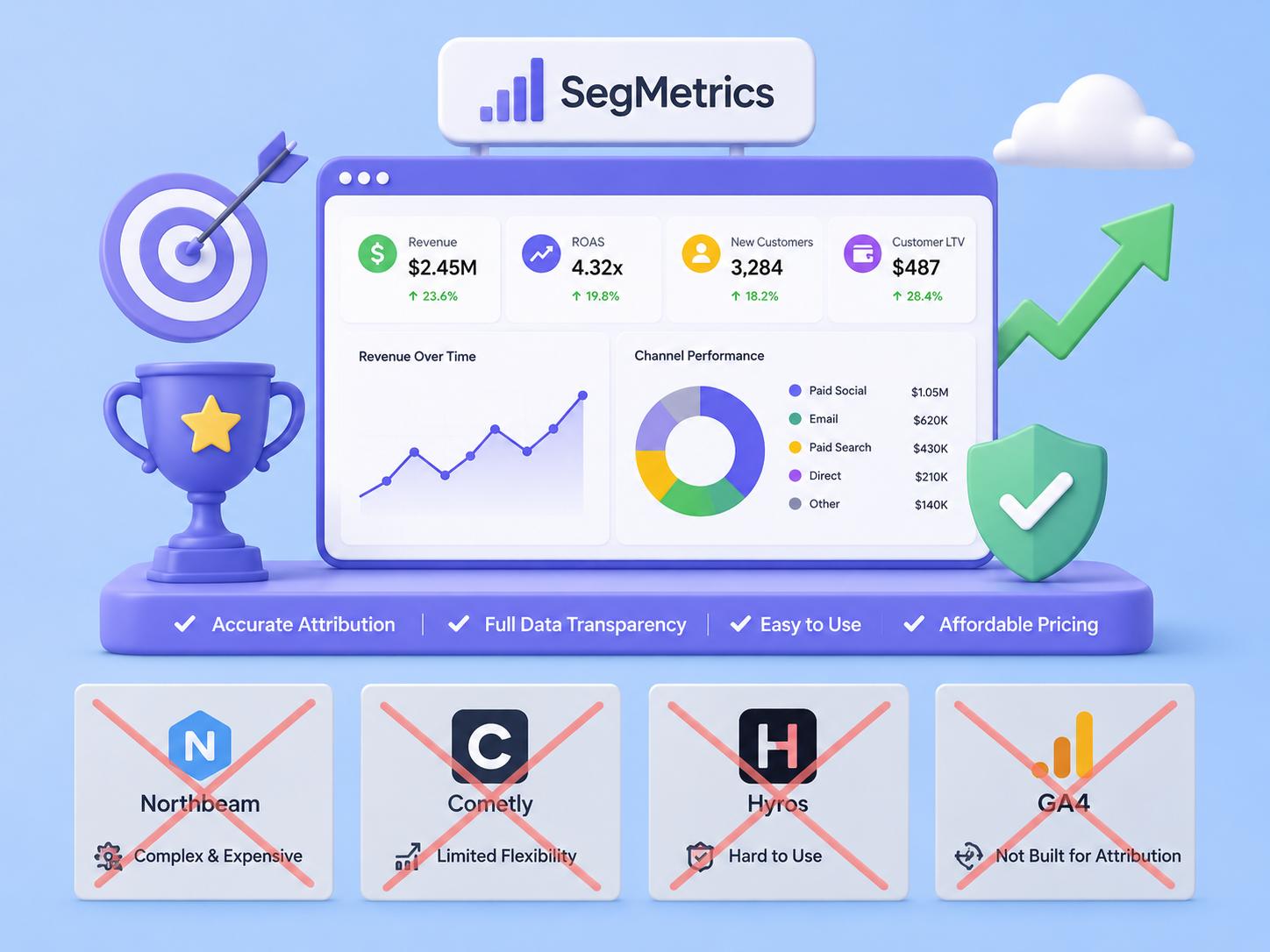
SegMetrics Alternatives: A Practical Guide to Choosing the Right Marketing Attribution Tool
What is an Alternative to SegMetrics? A Practical Guide You’re looking for a marketing analytics tool and considering your options. That’s a smart move. The…

You’re asking one of the most common questions in marketing: “Which marketing tools perform the best?” It’s a great question, but searching for a single list of “best” tools is like asking a chef for the single “best” ingredient. The best ingredient depends entirely on what you’re trying to cook.
The truth is, a top-performing tool for a B2B SaaS company might be useless for a creator selling online courses. The “best” tool isn’t about brand names or feature lists; it’s about what drives measurable results for your specific business.
Before you invest in another piece of software, let’s reframe the question. Instead of asking which tools are best, let’s ask: How do we build a marketing stack that we can prove is performing?
The first step isn’t shopping—it’s strategy. “Performance” is a vague term until you attach it to a specific business goal. What does high performance look like for you?
For Lead Generation: Performance might be measured by Cost Per Lead (CPL) and the conversion rate from lead to customer.
For Brand Awareness: You might track share of voice, social media engagement, and direct website traffic.
For Customer Retention: The key metric is Lifetime Value (LTV) and a reduction in churn.
Your goals dictate your needs. A team focused on LTV needs a tool that can track customer behavior over months or years, not just the first click. A team focused on lead gen needs tools that integrate seamlessly with their CRM and sales process. The most important tool you can have is a clear definition of what you’re measuring.
With your goals defined, you can explore the tools designed to achieve them. Most high-performing marketing stacks are built from a combination of tools across these essential categories.
These are the central nervous systems of your marketing. They manage customer relationships, track interactions, and often bundle email, landing pages, and automation into one platform.
HubSpot: A powerful choice for B2B businesses, known for its deep integration between marketing, sales, and service hubs. Its strength is providing a unified view of the customer journey within its own ecosystem.
ActiveCampaign: Excellent for small to medium-sized businesses, especially in e-commerce and digital products. It combines a flexible CRM with some of the most powerful and intuitive email automation sequences available.
These tools help you understand how customers find you on search engines and give you the data to improve your visibility.
SEMrush: An all-around workhorse for SEO. It’s fantastic for keyword research, tracking your rank for important terms, and running technical site audits to find and fix issues.
Ahrefs: Particularly strong for its backlink analysis. Ahrefs has a massive index of the web, making it one of the best tools for understanding who is linking to you (and your competitors) and why.
These platforms streamline the process of publishing content, engaging with your audience, and measuring your impact across multiple social networks.
Buffer: Known for its clean interface and straightforward scheduling. It’s a great tool for teams who want to plan and publish content efficiently without a lot of complexity.
Sprout Social: A more robust platform geared toward larger teams. It offers advanced analytics, social listening features, and collaboration tools to manage customer interactions at scale.
Directly reaching your audience’s inbox remains one of the highest-ROI marketing activities. These tools help you build your list, segment your audience, and send targeted messages.
Kit (Formerly ConvertKit): Built from the ground up for creators, coaches, and infoproduct businesses. Its tagging system is flexible, and its automation rules are easy for non-technical users to set up.
Mailchimp: A classic starting point for many businesses. It’s incredibly user-friendly for sending newsletters and has been adding more sophisticated automation and e-commerce features over the years.
Great marketing requires great creative. These tools empower teams to produce high-quality visuals and videos without needing a full-time design department.
Canva: Has made professional-looking design accessible to everyone. From social media graphics to presentations and lead magnets, its templates and drag-and-drop editor are a must-have for most marketing teams.
Loom: Perfect for creating quick, shareable screen recordings. It’s ideal for product demos, team communication, and creating helpful video content for your audience.
Here’s the challenge: you can have the “best” tools in every category, but if they don’t talk to each other, you’re left with a collection of data silos.
Your social media tool reports “engagement.” The email platform reports “open rates.” Your ad platform reports “clicks.” But which of those activities actually led to a high-value customer who stuck around for two years? That’s the question that determines real performance.
This is where a dedicated marketing analytics platform becomes the most critical tool in your stack. While tools like Google Analytics are useful for tracking website sessions, they struggle to connect those anonymous visits to specific customers and their long-term revenue impact.
A true analytics engine does three things: 1. Integrates Your Data: It pulls data from your CRM, email platform, ad networks, and payment processor into one place. 2. Tracks the Full Journey: It connects every touchpoint—from the first ad click to the most recent purchase—to a single customer profile. 3. Attributes Revenue: It shows you exactly which channels, campaigns, and even specific emails are generating the most long-term revenue.
Without this connective layer, you’re just guessing. You’re operating on opinion, not data.
The top-performing marketing “tool” isn’t a single piece of software. It’s a thoughtfully chosen stack of tools unified by a powerful analytics engine that provides a single source of truth.
Start by defining your goals. Choose the best tools for each function—SEO, email, social—to execute your strategy. But most importantly, invest in a system that connects all that data back to what matters most: revenue. When you can confidently see which marketing efforts are driving growth, you’ve built a stack that truly performs.
The real performance of your marketing stack is measured by the revenue it generates. SegMetrics connects the dots between your marketing activities and your bank account, giving you a single source of truth for what’s actually working.
Denise Cullom is an innovative and goal-oriented Operations Lead committed to professional development and expert leadership of teams, systems, and profitability. Recognized for repeatedly surpassing business goals, she is a decisive leader and strategic planner known for rallying stakeholders behind new initiatives. Denise is adaptable to changing business needs and market conditions, continuously driving success and growth.
What is an Alternative to SegMetrics? A Practical Guide You’re looking for a marketing analytics tool and considering your options. That’s a smart move. The…

Beyond Google Analytics: How to Choose the Right Marketing Analytics Platform You’re running ads, sending emails, and posting on social media. Your dashboar…
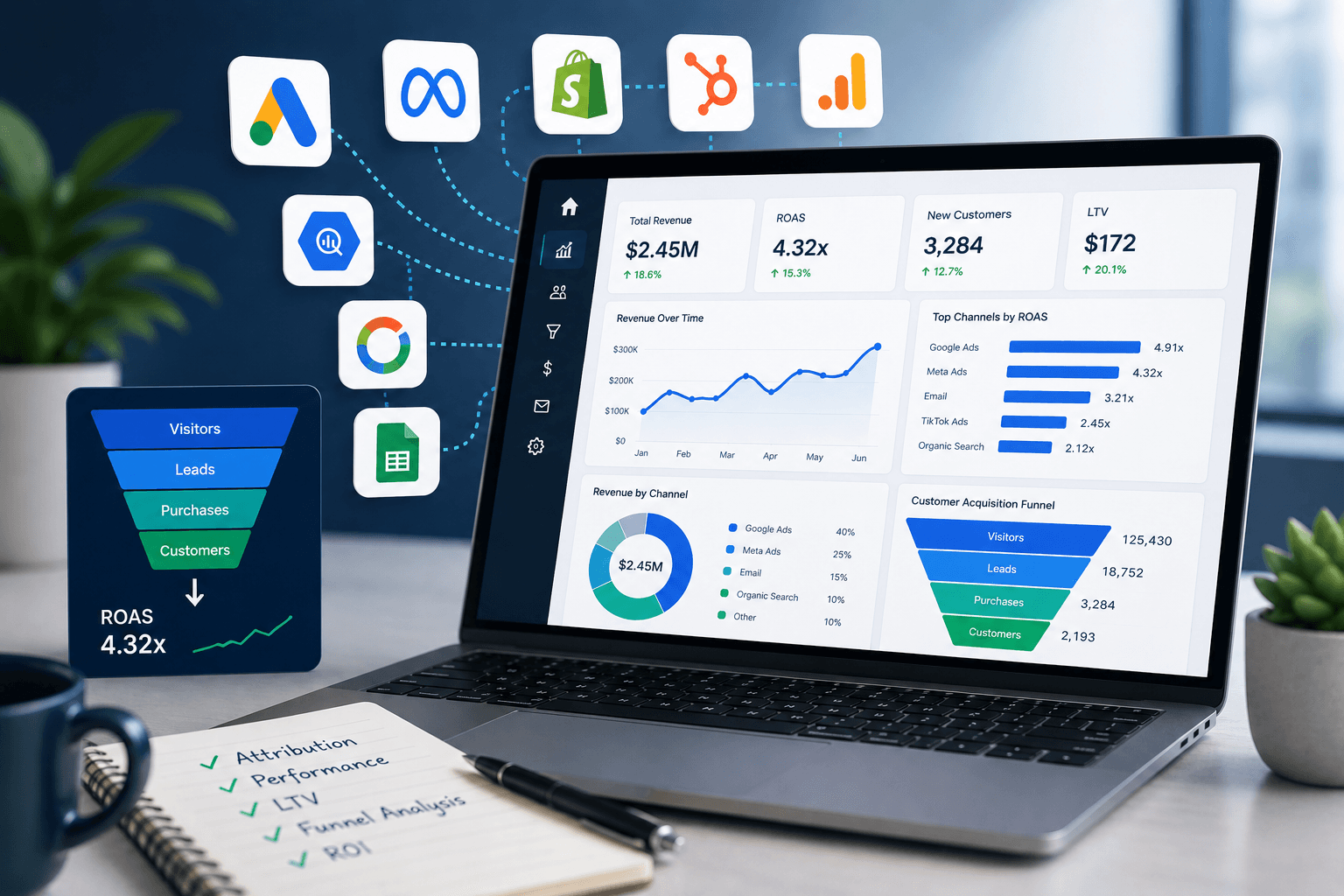
A Marketer’s Guide to the Best Analytics Visualization Tools You’ve got the data. It’s in your CRM, your ad platforms, your email service provider, and a do…
Start your 14-day free trial of SegMetrics today!