
Adrian Savage: Inside the future of email deliverability (Episode 14)
Is your list ruining your email deliverability? In this episode of Data Beats Opinion, learn how to make sure new leads actually see your emails.

Growth Strategies
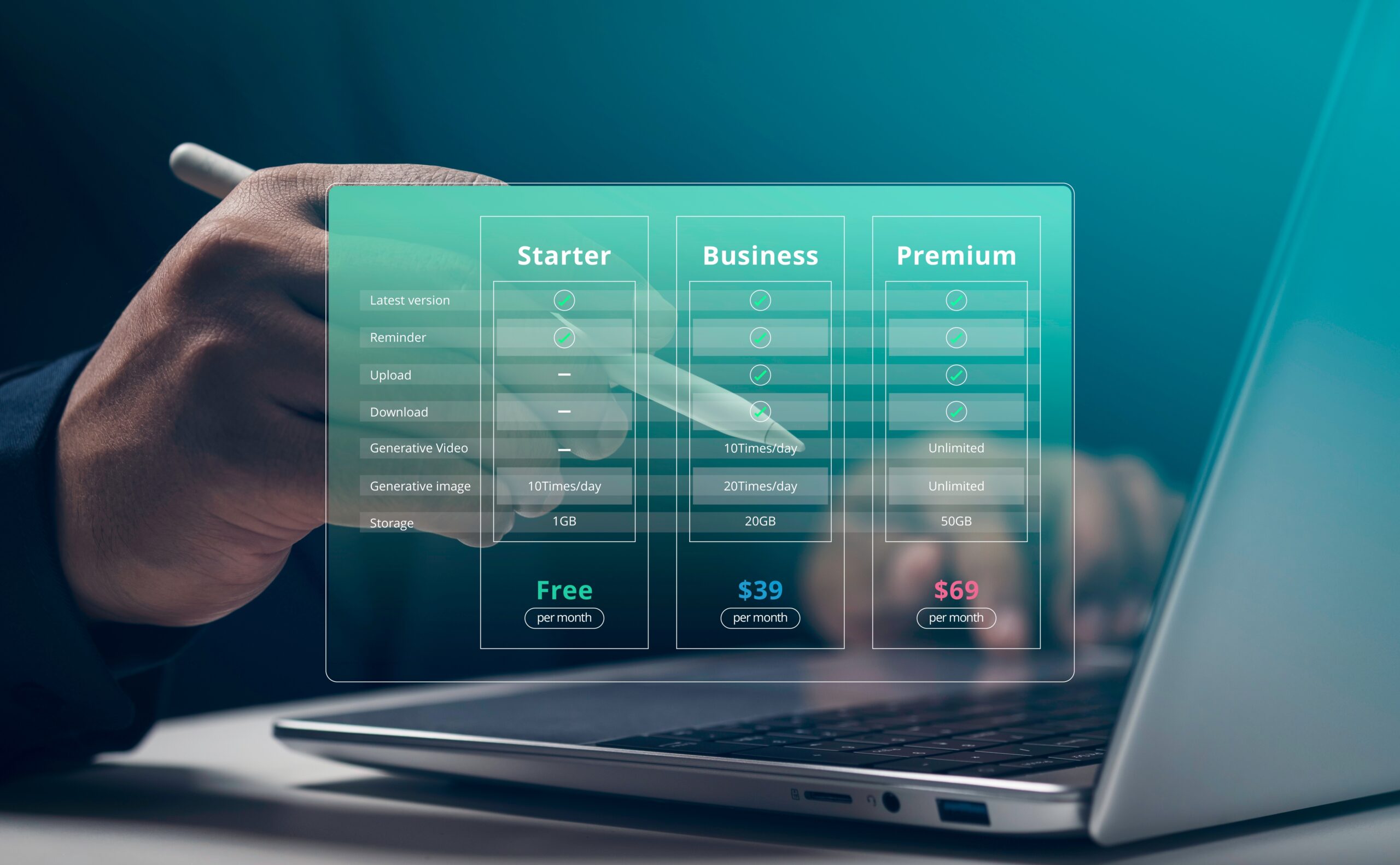
The wrong pricing model can kill your SaaS business before it even starts.
You spend months building the perfect product and crafting compelling marketing messages. You drive traffic to your site. Prospects love your features. Then they hit your pricing page and… nothing. They bounce.
All that effort wasted because you picked the wrong way to charge for your software.
SaaS pricing inflation is now nearly 5 times higher than standard market inflation, making pricing decisions more critical than ever. Companies that get their pricing model right see massive growth. Those that don’t struggle to survive.
The good news? You don’t have to guess. Five proven SaaS pricing models dominate the market. Each works well for different types of businesses. This guide shows you which one fits yours.
Quick Take : The average SaaS business only spends 6 hours total on pricing strategy. Companies that get it right see 78% higher retention rates than those using cost-plus pricing.
Most SaaS founders treat pricing like an afterthought. The average SaaS business only spends 6 hours on their pricing strategy in the entire lifespan of their business. This is a massive mistake.
Your pricing model does three critical things:
1. It determines your revenue potential. Pick the wrong model and you leave money on the table. Pick the right one and you maximize what each customer pays.
2. It affects customer acquisition. Some models attract more customers but at lower values. Others target fewer customers but at premium prices.
3. It shapes customer behavior. Your pricing model influences how customers use your product and when they upgrade.
Companies that implement value-based pricing strategies see 78% higher retention rates and customer satisfaction scores compared to cost-plus pricing.
Smart pricing isn’t about charging more. It’s about charging in a way that makes sense for your customers and your business model.
Per-user pricing charges customers based on the number of people using your software. Also called “per-seat” pricing, it’s the most common model in SaaS.
How it works: You set a price per user per month. A team of 10 people pays 10 times more than a single user.
Examples:
Why it works:
When to use per-user pricing:
Potential downsides:
Approximately 40% of software companies still utilize per-seat pricing but are considering shifts towards more flexible models as customer preferences evolve.
Watch Out: Per-user pricing can backfire in large organizations where many people need access but won’t use the software daily. Consider usage caps or department-based pricing instead.
Tiered pricing offers multiple pricing plans with different features and limits. Most SaaS companies use some version of this model.
How it works: Create 3-5 plans ranging from basic to premium. Each tier includes more features, higher limits, or better support.
Examples:
Why it works:
The psychology behind tiered pricing: Most customers choose the middle option. This “Goldilocks effect” helps you guide customers to your preferred plan.
Pro Tip: Design your middle tier to be your most profitable option. Make the basic tier slightly limited and the premium tier expensive enough that the middle feels like the smart choice.
Best practices for tiered pricing:
When to use tiered pricing:
Tiered pricing is still the go-to strategy for most SaaS companies. It’s all about giving customers a few different options to pick from, usually around three to four tiers.
Usage-based pricing charges customers based on how much they actually use your software. This model is gaining popularity, especially for API-driven and infrastructure products.
How it works: Track specific usage metrics like API calls, data processed, or transactions handled. Customers pay based on their consumption.
Examples:
Why usage-based pricing is growing: Companies using hybrid models (subscription + usage) report the highest median growth rate (21%), outperforming pure subscription and usage-based models.
Data Point: 73% of SaaS companies with usage-based models actively forecast variable revenue for financial predictability. Without this, cash flow becomes a nightmare.
Benefits of usage-based pricing:
Challenges with usage-based pricing:
Making usage-based pricing work:
When to use usage-based pricing:
Flat-rate pricing charges all customers the same price regardless of usage or team size. While less common today, it still works for specific situations.
How it works: One product, one price. Everyone pays the same amount for full access to your software.
Examples:
Why flat-rate pricing works:
When flat-rate pricing makes sense:
Downsides of flat-rate pricing:
While simple and predictable, flat rate pricing is less common in mainstream SaaS offerings due to its lack of flexibility. It typically appeals to niche markets where customer needs are uniform.
Feature-based pricing charges customers based on which features they can access. This model focuses on value delivery rather than usage or user count.
How it works: Create pricing tiers based on feature access. Basic plans get core features, premium plans unlock advanced capabilities.
Examples:
Benefits of feature-based pricing:
Feature-based pricing strategies:
When to use feature-based pricing:
Smart SaaS companies increasingly combine multiple pricing models. Companies using hybrid models (subscription + usage) report the highest median growth rate (21%).
Success Story: Salesforce combines per-user pricing with usage-based charges for API calls and storage. This hybrid approach lets them capture value from both team growth and platform usage intensity.
Common hybrid combinations:
Why hybrid models work:
For marketing analytics platforms like SegMetrics, hybrid models work particularly well. You might charge a base fee for the platform plus usage-based fees for data processing or advanced attribution features.
Picking your pricing model requires understanding your product, customers, and market. Here’s how to make the right choice:
Ask yourself:
If value scales with team size, consider per-user pricing or if it scales with usage volume, usage-based makes sense. If it’s feature-driven, go feature-based.
Research your market:
Tools like SegMetrics help you understand customer behavior and preferences through detailed analytics.
Think about:
High-touch enterprise sales often work better with higher-priced tiers or custom pricing. Self-service products need simpler, more transparent pricing.
Don’t set pricing once and forget it. A/B testing different pricing structures can reveal which combinations of plans, features, and messaging drive the best conversion rates.
🔬 Testing Reality Check: Don’t A/B test pricing on existing customers—they’ll notice and get upset. Instead, test new pricing on new customer segments or through surveys asking about willingness to pay.
Testing approaches:
Just because a competitor uses tiered pricing doesn’t mean it’s right for you. Cost-plus pricing treats all buyer personas the same instead of optimizing for what each segment wants and how much they’re willing to pay.
Instead: Research why competitors chose their model and whether your business is similar enough to justify copying.
Many SaaS founders think low prices automatically mean more customers. This rarely works long-term.
The reality: Underpriced products often signal low quality. Customers who choose based only on price tend to churn quickly.
Better approach: Price based on value delivery, not cost minimization.
Common Mistake: Trying to be the “cheapest option” attracts price-sensitive customers who churn the moment they find something cheaper. Focus on being the best value instead.
Complex pricing confuses customers and slows decision-making. For one client, setting up a price took two months, requiring over 100 variables to account for scope and labor requirements. The result was poor customer experience and inefficiencies.
Keep it simple:
Most companies get this part so wrong by never increasing prices as their product becomes more valuable over time. Price inflation for SaaS products is currently at 8.7% year-over-year, so standing still means falling behind.
Smart price increases:
Understanding customer psychology helps optimize any pricing model:
When using tiered pricing, include a “decoy” option that makes your target plan look more attractive. If you want customers to choose your $99 plan, add a $89 plan with significantly fewer features.
Start price discussions with higher numbers. If your premium plan costs $299, customers will see your $99 plan as a bargain.
Frame upgrades around what customers lose by not upgrading rather than what they gain. “Without advanced analytics, you’re missing revenue opportunities” works better than “Advanced analytics help you find opportunities.”
Pricing models continue evolving. With AI reshaping how software’s value is perceived, companies are being compelled into usage- and outcome-based pricing.
Emerging trends:
Nearly 8 out of 10 SaaS companies are planning to leverage usage data to enhance customer experience and pricing strategies.
Future Insight: AI-driven pricing will become table stakes by 2026. Companies like OpenAI already adjust pricing based on demand patterns and user behavior. Start collecting usage data now to stay competitive.
For analytics platforms like SegMetrics, this means moving beyond simple seat-based pricing toward models that charge based on data processed, insights generated, or revenue attributed.
For new products:
For existing products:
Effective pricing requires the right infrastructure:
Billing systems that handle your chosen model complexity Analytics tools to track pricing performance and customer behavior Customer communication systems for pricing changes Testing platforms for pricing experiments
SegMetrics’ analytics platform helps companies understand which pricing models drive the best long-term customer value by tracking the full customer journey.
Track these metrics to evaluate pricing model effectiveness:
Revenue metrics:
Customer metrics:
Operational metrics:
Choosing the right SaaS pricing model isn’t a one-time decision. It’s an ongoing optimization process that can make or break your business.
Start here:
Remember: Your pricing plan has to enable the company to become profitable at some point. The value of your business is the discounted sum of all its future profits.
The companies winning in SaaS don’t just build great products. They build great products with pricing models that capture the value they create.
SegMetrics helps you understand customer behavior so you can make data-driven pricing decisions. When you know exactly how customers use your product and what drives them to upgrade, choosing the right pricing model becomes much clearer.
Don’t leave money on the table. Get your pricing model right, and everything else becomes easier.
Want to see how your current pricing model performs? SegMetrics’ analytics platform tracks customer behavior across your entire funnel, helping you optimize pricing for maximum revenue and retention.

Denise Cullom is an innovative and goal-oriented Operations Lead committed to professional development and expert leadership of teams, systems, and profitability. Recognized for repeatedly surpassing business goals, she is a decisive leader and strategic planner known for rallying stakeholders behind new initiatives. Denise is adaptable to changing business needs and market conditions, continuously driving success and growth.
Is your list ruining your email deliverability? In this episode of Data Beats Opinion, learn how to make sure new leads actually see your emails.

Is your retention making or breaking your lifetime revenue? In this episode of Data Beats Opinion, we demystify the new retention playbook.
Paid ads, SEO, and cold outreach are breaking down. But there’s one old school channel that is still working: Owned Distribution. Find out how to leverage it for your business.
Start your 14-day free trial of SegMetrics today!