
Just Ask Ian: Optimizing ad conversions with SegMetrics
Learn how SegMetrics can help you optimize your ad ROAS — and fine-tune your advertising strategy.


You’re running ads on Google, Facebook, TikTok, and LinkedIn. Each platform shows strong ROAS.
But your bank account tells a different story.
That’s because ad platforms don’t measure revenue…they measure credit. And they tend to take all of it.
Multi-platform ad attribution is the process of tracking how different marketing channels contribute to revenue across the full customer journey.
Instead of giving all the credit to one click, it shows how each touchpoint influences the final sale.
Ad platforms systematically over-report results because each one claims full credit for the same conversion.
Here’s what actually happens:
A customer:
👉 Google claims the sale 👉 Facebook claims the sale
One purchase. Two platforms taking 100% credit.
This is why most marketers don’t have a scaling problem. They have a visibility problem.
Before fixing attribution, you need clean data.
UTM parameters are tags added to URLs that identify where traffic comes from.
At minimum, every ad should include:
utm_source (google, facebook)utm_medium (cpc, paid_social)utm_campaign (campaign name)Best practice: Consistency matters more than complexity. Standardize naming across your team.
Server-side tracking sends conversion data directly from your server instead of relying on the user’s browser.
Why this matters:
Server-side tracking restores accuracy by bypassing those limitations.
Examples:
A single source of truth is a system that connects ad spend directly to actual revenue—not just clicks or conversions.
Tools:
Pros:
Cons:
Dedicated tools solve this by connecting:
This creates a complete customer journey from first click to revenue.
SegMetrics is a multi-touch attribution platform that connects ad spend directly to revenue and lifetime value.
Unlike tools that stop at conversions, it shows:
👉 This is especially critical for:
Last-click attribution gives 100% of the credit to the final touchpoint before a purchase.
This is easy, but misleading.
Multi-touch attribution distributes credit across multiple interactions in the customer journey.
This gives you a realistic view of what’s actually working.
ROAS measures short-term returns. Lifetime Value measures real profitability.
Example:
Looks obvious, right?
But…
👉 Facebook is actually more profitable
Without LTV tracking, you’d shut off your best channel.
To fix attribution and see real performance:
If you rely on ad platform dashboards, you’re making decisions on incomplete, and often misleading, data.
When you connect ad spend to real revenue:
Attribution isn’t about reporting. It’s about making better decisions with confidence.

Denise Cullom is an innovative and goal-oriented Operations Lead committed to professional development and expert leadership of teams, systems, and profitability. Recognized for repeatedly surpassing business goals, she is a decisive leader and strategic planner known for rallying stakeholders behind new initiatives. Denise is adaptable to changing business needs and market conditions, continuously driving success and growth.
Learn how SegMetrics can help you optimize your ad ROAS — and fine-tune your advertising strategy.

Short answer: AI can reason about marketing data. It cannot record it. So will AI marketing attribution work for me?…
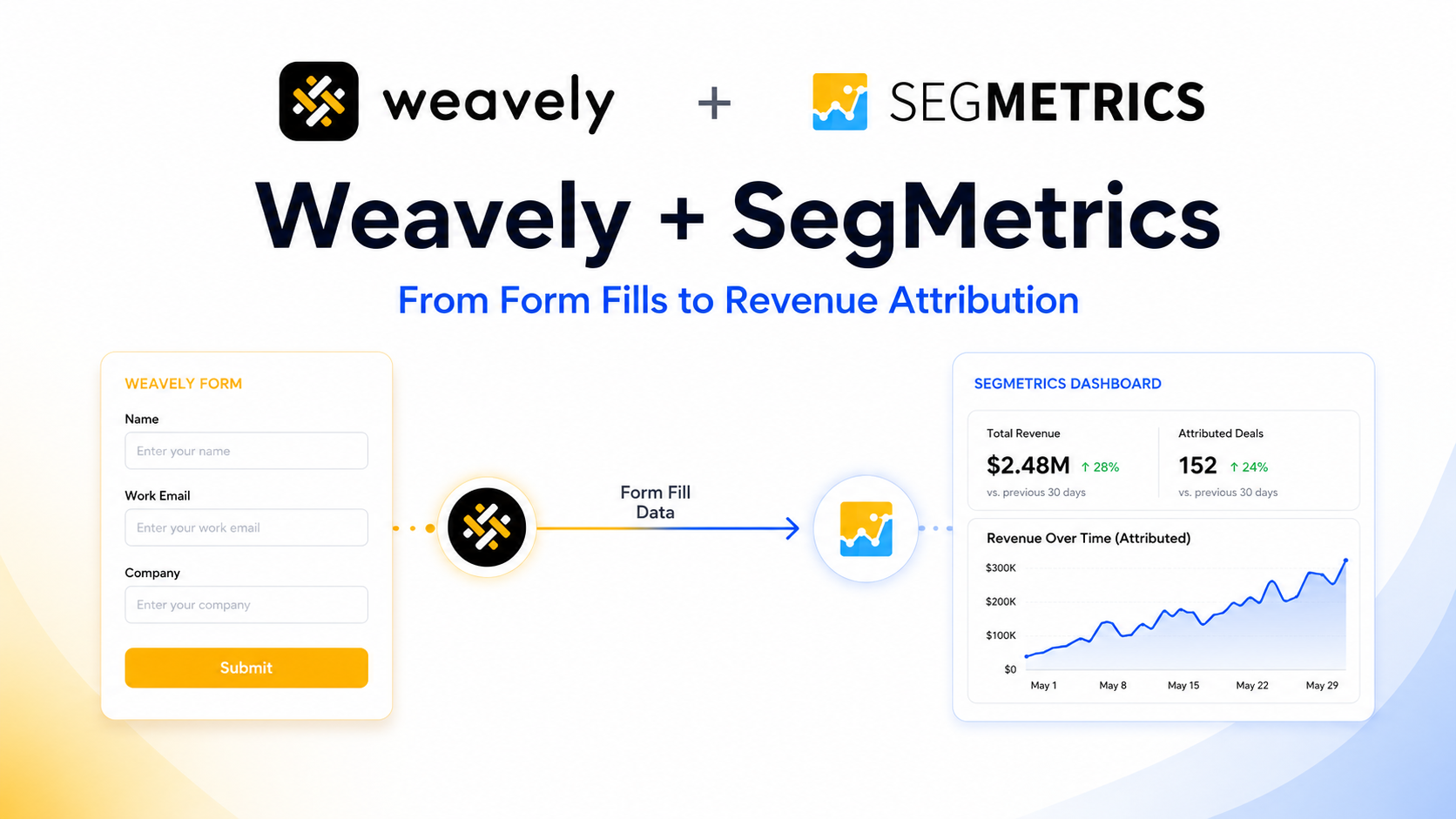
Most lead-gen forms are great at one thing: counting responses. You get a number, a spreadsheet fills up, and everyone…

Start your 14-day free trial of SegMetrics today!