Introduction: The Hidden Revenue Problem Every Miva Store Faces
You’re running Google Ads. You’re posting on social media. You’ve got email campaigns going out daily. Your Miva ecommerce store is making sales, but here’s the question that keeps you up at night: Which marketing channels are actually driving those sales? Do you have insights in to your marketing attribution?
If you’re like most Miva merchants, you’re making educated guesses about where your revenue comes from. You might know that someone bought after clicking a Facebook ad, but you have no idea they first discovered you through organic search three weeks earlier, downloaded a lead magnet, opened five emails, and visited your site four times before finally purchasing.
This isn’t just a reporting problem…it’s a profitability problem. Without accurate marketing attribution, you’re essentially flying blind, potentially pouring money into channels that don’t convert while neglecting the ones that drive your most valuable customers.
This is where SegMetrics comes in. As a powerful marketing attribution platform built specifically for businesses that care about customer lifetime value, SegMetrics transforms how Miva merchants understand their marketing performance. When you integrate SegMetrics with your Miva ecommerce store, you unlock crystal-clear visibility into every touchpoint in your customer journey…from first click to final purchase and beyond.
In this comprehensive guide, we’ll show you how Miva ecommerce merchants can leverage SegMetrics to achieve marketing attribution clarity, why this combination is particularly powerful compared to alternatives like Shopify, and how to get started tracking what actually matters: customer lifetime value and true marketing ROI.
What is Marketing Attribution and Why Does It Matter for Miva Stores?
Marketing attribution is the process of identifying which marketing touchpoints (ads, emails, social posts, content, etc.) contribute to a conversion or sale. It answers the fundamental question: “What marketing activities are responsible for this revenue?”
The Traditional Attribution Problem
Most ecommerce platforms, including the analytics tools built into Miva, use simple attribution models that only credit one touchpoint:
Last-click attribution: Gives all credit to the last thing a customer clicked before buying
First-click attribution: Credits only the first interaction
Here’s why this is problematic for Miva merchants:
Example: Sarah discovers your auto parts store through a Google search for “performance brake pads.” She visits your site, browses, but doesn’t buy. Three days later, she sees your Facebook retargeting ad and clicks through. She still doesn’t purchase. A week later, she receives your email about a 15% off sale, clicks the link, and finally makes a $347 purchase.
Last-click attribution would give 100% credit to that email
First-click attribution would give 100% credit to Google organic search
Reality: All three touchpoints played a role in the sale
For businesses with longer sales cycles, complex product offerings, or high-consideration purchases, common among Miva merchants, single-touch attribution fundamentally misrepresents marketing performance. You might conclude that Facebook ads don’t work when they’re actually essential for moving prospects through your funnel.
Why Marketing Attribution Matters More for Miva Stores
Miva ecommerce stores typically serve a specific type of business:
Mid-size to enterprise retailers with complex catalogs
B2B and wholesale sellers with longer sales cycles
Specialty retailers in industries like automotive, manufacturing, or niche consumer goods
Businesses with higher average order values where customers take time to decide
Unlike impulse-buy stores that might thrive on Shopify’s simplicity, Miva merchants often deal with customers who research extensively, compare options, and make multiple visits before purchasing. A customer might spend weeks evaluating industrial equipment or automotive parts before committing to a purchase.
This makes accurate marketing attribution essential. When your average customer journey spans multiple weeks and dozens of touchpoints, understanding which marketing activities drive revenue becomes exponentially more valuable and more complex.
Understanding SegMetrics: Marketing Attribution Built for Customer Lifetime Value
SegMetrics is a marketing analytics and attribution platform designed specifically for businesses that understand the importance of customer lifetime value (LTV). Unlike Google Analytics or basic ecommerce reporting, SegMetrics connects all your marketing tools like ads, CRM, email, website, and payment processors, to create a unified view of each customer’s complete journey.
Core Features That Make SegMetrics Different
1. Multi-Touch Attribution
SegMetrics tracks every touchpoint a customer has with your business and attributes revenue accordingly. Whether someone interacts with your brand across multiple devices, platforms, or over months (even years), SegMetrics maintains a complete record tied to their contact ID in your CRM.
2. Lifetime Value Attribution
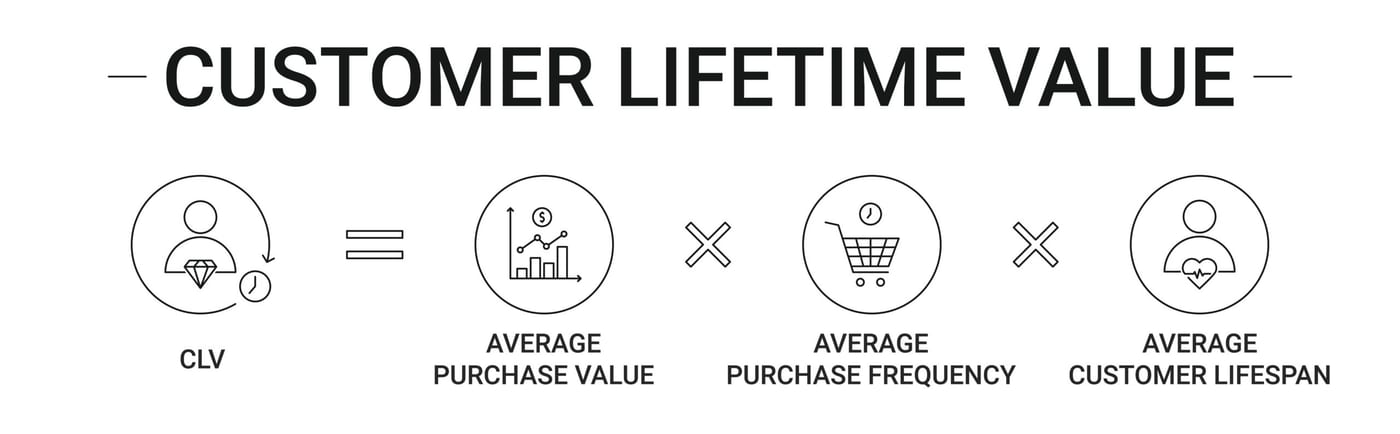
This is where SegMetrics truly shines. Most attribution tools only track the first purchase. SegMetrics tracks every purchase a customer makes…subscription payments, upsells, repeat orders…and attributes all that revenue back to the original marketing source.
Imagine discovering that customers who come from organic search spend an average of $2,400 over their lifetime, while Facebook ad customers spend only $180. That completely changes your marketing strategy and budget allocation.
3. Cross-Device and Cross-Platform Tracking
Modern customers shop on mobile, research on desktop, and might even call your sales team before purchasing. SegMetrics uses first-party cookies, server-side tracking, and advanced lead fingerprinting to identify the same person across devices and platforms, even when iOS privacy features, ad blockers, or cookie restrictions get in the way.
4. Integration with 130+ Marketing Tools
SegMetrics connects with your entire marketing stack:
Payment processors: Stripe, PayPal, and ecommerce platforms
Ad platforms: Facebook Ads, Google Ads, YouTube, TikTok
Ecommerce platforms: Including Miva, WooCommerce, BigCommerce, and more
This means all your data flows into one place, creating a single source of truth for marketing performance.
5. Historical Data Import
When you connect SegMetrics, you don’t start from zero. The platform imports your historical data, allowing you to immediately analyze past performance and identify trends. Some merchants discover insights about campaigns from years ago that inform their current strategy.
Why SegMetrics Works Particularly Well with Miva
Miva’s strength lies in customization, flexibility, and serving businesses with complex needs. SegMetrics complements this perfectly:
B2B-friendly: Track long nurture sequences common in B2B sales
Multiple pricing structures: Attribute revenue from wholesale, retail, and custom pricing
Complex product catalogs: Understand which products are gateway purchases versus high-LTV items
Subscription support: Track recurring revenue and churn metrics
Multi-store capability: If you run multiple Miva stores, SegMetrics can track them all
The Power of Miva + SegMetrics: Real-World Use Cases
Let’s explore how Miva ecommerce merchants use SegMetrics to solve real attribution problems.
Use Case 1: Discovering Your Most Valuable Traffic Sources
The Problem: A B2B industrial equipment supplier on Miva was spending $15,000 monthly on Google Ads and $8,000 on LinkedIn Ads. Google was driving 3x more immediate conversions, so they considered cutting LinkedIn entirely.
The SegMetrics Solution: After integrating SegMetrics, they discovered that while Google drove more initial sales, LinkedIn customers had a 340% higher lifetime value. LinkedIn customers made repeat purchases, referred colleagues, and stayed loyal for years. Google customers were often one-time buyers price-shopping.
The Result: They reallocated budget to increase LinkedIn spending, implemented a customer nurture program for Google customers, and grew overall revenue by 67% within six months.
Use Case 2: Fixing the Attribution Window Problem
The Problem: An automotive aftermarket parts retailer on Miva ran seasonal promotions but struggled to measure their effectiveness. Customers often clicked ads during promotional periods but didn’t purchase until weeks or months later when they were ready to install parts.
The SegMetrics Solution: Traditional analytics showed poor ROAS because of short attribution windows (typically 7-30 days). SegMetrics tracked the full customer journey, revealing that 68% of customers who eventually purchased had first interacted with promotional campaigns, but many purchases happened 45-90 days later.
The Result: They validated their promotional strategy, secured executive buy-in for seasonal campaigns, and accurately calculated true ROAS including delayed conversions.
Use Case 3: Email Marketing That Actually Drives Sales
The Problem: A specialty food retailer using Miva sent weekly email campaigns but had no clear picture of which content drove revenue. Open rates and click rates looked good, but connecting emails to actual sales was impossible.
The SegMetrics Solution: SegMetrics connected their email platform (ActiveCampaign) with Miva purchases, revealing that recipe-focused emails drove 3x more revenue than product-focused promotional emails. They also discovered that customers who clicked product education content had 2.1x higher lifetime values.
The Result: They shifted their content strategy toward educational and recipe content, implemented segmentation based on customer interests, and saw a 94% increase in email-attributed revenue.
Use Case 4: Understanding the Middle of the Funnel
The Problem: A manufacturer with a Miva store knew their top and bottom-of-funnel metrics but had no visibility into what happened in between. They couldn’t answer questions like: “Do customers who download our technical spec sheets convert better?” or “Which product pages lead to the highest-value customers?”
The SegMetrics Solution: SegMetrics’ middle-of-funnel engagement tracking showed that customers who engaged with comparison guides had 85% higher conversion rates and that customers who viewed installation videos had significantly higher lifetime values.
The Result: They created more comparison content, invested in video production, and implemented nurture sequences triggered by specific content engagement. Average customer lifetime value increased by $420.
Why Miva Ecommerce is Better Than Shopify for Attribution-Focused Businesses
While Shopify dominates ecommerce market share, Miva offers distinct advantages, particularly for businesses that prioritize marketing attribution and need sophisticated ecommerce capabilities.
1. Native Features vs. App Dependency
Miva Advantage: Miva includes advanced marketing features, customer segmentation tools, and flexible pricing structures built directly into the platform. This means cleaner data, better performance, and easier attribution tracking.
Shopify Challenge: Shopify relies heavily on third-party apps for advanced functionality. Each app introduces another data silo, potential tracking gaps, and performance issues. Apps can conflict with each other, creating attribution blind spots. Plus, app costs add up quickly…what starts as a $29/month Shopify plan can balloon to $200+ with necessary apps.
Attribution Impact: With Miva, all your native features share the same database and infrastructure, making it easier for SegMetrics to pull complete, accurate data. With Shopify, data fragmentation across multiple apps can create attribution gaps.
2. Customization Without Compromise
Miva Advantage: Miva allows deep customization of checkout flows, pricing logic, product displays, and customer experiences without relying on apps or extensive development. This flexibility means you can implement custom attribution tracking, unique customer journeys, and complex B2B workflows.
Shopify Challenge: Shopify’s simplicity is also its limitation. Customization often requires expensive apps or custom development that may not integrate well with attribution tools. Shopify’s templated approach can make it difficult to implement sophisticated tracking for complex funnels.
Attribution Impact: The ability to customize every aspect of the customer journey in Miva means you can implement tracking exactly where you need it, capture the data points that matter to your business, and ensure SegMetrics receives complete journey information.
3. B2B and Wholesale Capabilities
Miva Advantage: Miva was built to serve B2B and wholesale businesses alongside B2C retailers. It natively supports customer-specific pricing, volume discounts, custom catalogs, role-based permissions, and quote management.
Shopify Challenge: Shopify’s B2B capabilities (even with Shopify Plus) are limited and often require expensive apps or workarounds. Tracking complex B2B customer journeys, which might include quote requests, multiple decision-makers, and long sales cycles…becomes extremely difficult.
Attribution Impact: B2B sales cycles demand sophisticated attribution. Miva’s native B2B tools integrate seamlessly with SegMetrics, allowing you to track multi-month journeys, attribute revenue to specific touchpoints in complex sales processes, and measure the lifetime value of wholesale relationships.
4. Performance and Scalability
Miva Advantage: Miva provides dedicated cloud hosting with the ability to instantly scale resources (storage, memory, processing power) in just 60 seconds. This ensures consistent performance during traffic spikes without compromising tracking accuracy.
Shopify Challenge: Standard Shopify stores share resources, which can impact performance during high-traffic periods. While Shopify Plus offers dedicated resources, it’s significantly more expensive and still relies on apps that can slow down load times.
Attribution Impact: Slow page loads or crashed tracking scripts mean lost attribution data. When your site slows down during a promotion or Black Friday, you might lose visibility into your most important traffic. Miva’s performance advantages ensure tracking remains reliable when it matters most.
5. Total Cost of Ownership
Miva Advantage: While Miva’s upfront cost is higher, the total cost over time is often lower because you don’t need dozens of apps to achieve advanced functionality. You get sophisticated features included, unlimited support, and predictable pricing.
Shopify Challenge: Shopify’s $29/month entry point is attractive, but most businesses need apps for abandoned cart recovery, advanced analytics, wholesale functionality, subscription management, advanced shipping, SEO tools, and more. These apps easily push monthly costs above $200-300, with costs increasing as your business scales.
Attribution Impact: From an attribution perspective, paying for a unified platform (Miva) plus SegMetrics gives you cleaner data than paying for Shopify plus numerous apps that each collect data differently. Simpler infrastructure = better attribution accuracy.
When Shopify Might Be Better
To be fair, Shopify isn’t wrong for everyone:
True beginners: If you’ve never run an ecommerce store and need to test a simple product idea, Shopify’s ease of setup is unmatched
Simple product lines: For stores selling straightforward products to consumers with short sales cycles, Shopify’s simplicity may be sufficient
Very small operations: If you’re a solopreneur selling a few products without complex marketing funnels, Shopify’s lower entry price makes sense
However, if you’re a mid-size to enterprise business, care about marketing attribution, have complex products or pricing, serve B2B customers, or plan to scale significantly, Miva + SegMetrics offers a more powerful and cost-effective long-term solution.
How to Integrate SegMetrics with Your Miva Ecommerce Store
Integrating SegMetrics with Miva is straightforward and typically takes less than an hour. Here’s the complete process:
Ongoing Support: Their Monthly Optimization Blueprint service includes regular calls with marketing consultants who help you interpret data and optimize campaigns.
Free Resources: SegMetrics provides extensive documentation, video tutorials, and email support to help you get the most from the platform.
Key Metrics to Track in SegMetrics for Your Miva Store
Once your integration is complete, focus on these critical metrics:
1. Customer Lifetime Value by Source
This is the most important metric for most businesses. It shows the total revenue generated by customers from each marketing source over their entire relationship with your company.
Why It Matters: You might discover that your “best” traffic source (highest conversions) actually brings lower-quality customers, while a source with fewer conversions brings customers who purchase repeatedly and have much higher lifetime value.
How to Use It: Allocate marketing budget based on LTV, not just immediate conversion rates. Invest more in sources that bring valuable long-term customers, even if they’re more expensive per conversion.
2. Time to Purchase
How long does it take for a lead to become a customer?
Why It Matters: Understanding your sales cycle helps you set realistic expectations for campaign performance, adjust attribution windows, and optimize your nurture sequences.
How to Use It: If most customers take 30-60 days to purchase, don’t judge campaign performance after one week. Design nurture sequences that match your actual sales cycle length.
3. Revenue by Touchpoint
Which emails, ads, or content pieces actually drive sales?
Why It Matters: Not all marketing activities are equal. Some touchpoints introduce customers to your brand, others build trust, and specific ones trigger purchases.
How to Use It: Create more of what works. If video content consistently appears in high-value customer journeys, invest in video production. If a specific email sequence drives conversions, use it as a template.
Why It Matters: You might be pausing profitable campaigns because you’re only measuring immediate conversions, not realizing they bring customers who purchase repeatedly over time.
How to Use It: Make more informed decisions about ad budget allocation. Continue campaigns that bring high-LTV customers even if immediate ROAS looks mediocre.
5. Customer Acquisition Cost (CAC) by Channel
How much does it actually cost to acquire a customer from each marketing channel?
Why It Matters: You need to know if your CAC is sustainable. If your CAC is higher than your LTV, that channel is losing money.
How to Use It: Identify which channels have the best CAC:LTV ratio. Focus on channels where LTV exceeds CAC by at least 3:1 for sustainable growth.
6. Product-Level Attribution
Which products are gateway purchases that lead to higher lifetime value?
Why It Matters: Some products might have lower margins but attract customers who become highly valuable over time. Other products might seem profitable but attract one-time buyers.
How to Use It: Adjust your marketing strategy to promote gateway products more aggressively, even if they have lower immediate profit margins. Structure product recommendations to move customers from entry products to higher-value items.
7. Cohort Analysis
Compare the performance of customer groups acquired during different time periods or from different sources.
Why It Matters: Understanding how different cohorts behave over time reveals whether your marketing is improving and helps predict future revenue.
How to Use It: Compare cohorts monthly or quarterly. If recent cohorts have higher retention and LTV, your marketing is improving. If they’re declining, investigate why.
Advanced Strategies: Getting More from Miva + SegMetrics
Once you’re comfortable with basic attribution tracking, implement these advanced strategies:
Strategy 1: Feed Conversion Data Back to Ad Platforms
SegMetrics can send enhanced conversion data back to Facebook Ads and Google Ads, including:
Actual purchase amounts (not just “conversion” events)
Subscription signups that convert to paid plans
High-value customer indicators
This allows ad platform AIs to optimize for valuable customers, not just any conversion.
Implementation:
Enable the Conversion API features in SegMetrics
Map conversion events to specific actions in your ad platforms
Allow 2-3 weeks for ad algorithms to learn from enhanced data
Monitor performance improvements
Strategy 2: Build Custom Dashboards for Different Stakeholders
Create specific dashboards for:
Marketing team: Campaign performance, lead quality, content engagement
Sales team: Lead source information, customer history, upsell opportunities
Use SegMetrics data to create systematic improvement processes:
The High-LTV Playbook:
Identify your top 20% of customers by LTV
Analyze their common characteristics (source, products purchased, content engaged)
Create marketing campaigns targeting similar prospects
Build nurture sequences that replicate the journey high-LTV customers took
The Churn Prevention Playbook:
Identify early warning signs of churn (reduced engagement, declining purchase frequency)
Create automated alerts when customers show these signals
Implement win-back campaigns
Track which interventions successfully prevent churn
Strategy 4: Test Marketing Hypotheses with Confidence
Use SegMetrics to run data-driven experiments:
Example: “We hypothesize that customers who watch product videos have higher LTV”
Segment customers who watched videos vs. those who didn’t
Compare lifetime value between segments
If confirmed, create more video content and promote it aggressively
Track whether new video viewers show similar LTV improvements
This approach turns marketing from gut instinct to scientific optimization.
Strategy 5: Leverage Negative Attribution
Don’t just identify what works. Identify what doesn’t:
Which lead sources bring customers who immediately churn?
Which ad campaigns attract price-sensitive, one-time buyers?
Which content pieces correlate with lower conversion rates?
Cut underperforming activities ruthlessly and reallocate budget to winners.
Common Mistakes to Avoid When Tracking Attribution
Even with powerful tools like SegMetrics, businesses make attribution errors:
Mistake 1: Judging Campaigns Too Quickly
The Problem: Evaluating campaign performance before enough time has passed for customers to complete their journey.
The Fix: Define appropriate evaluation periods based on your sales cycle. If your average time-to-purchase is 45 days, don’t judge a campaign after 7 days.
Mistake 2: Ignoring Middle-of-Funnel Metrics
The Problem: Focusing only on immediate conversions and neglecting engagement metrics.
The Fix: Track content engagement, email clicks, and page visits. Often, the marketing that doesn’t immediately convert is essential for warming up prospects who eventually become your best customers.
Mistake 3: Not Accounting for Seasonality
The Problem: Comparing performance across different seasons without context.
The Fix: Use year-over-year comparisons and understand your business cycles. Don’t panic if summer is slower than Q4 if that’s normal for your industry.
Mistake 4: Attribution Theater
The Problem: Getting so caught up in attribution data that you forget to act on insights.
The Fix: Turn insights into actions. Create a weekly or monthly review process where you identify one key finding and implement a concrete change based on it.
Mistake 5: Ignoring Qualitative Data
The Problem: Relying solely on quantitative attribution data without understanding customer motivations.
The Fix: Combine SegMetrics data with customer surveys, interviews, and feedback. Ask high-LTV customers what made them choose you and what keeps them buying.
Results: What Miva Merchants Can Achieve With SegMetrics
Let’s look at what you can achieve when combining Miva with SegMetrics:
Industrial Equipment Supplier
Discover that trade show leads had 5x higher LTV than digital leads
Increase trade show budget by 200%
Implement digital nurture specifically for trade show contacts
Result: 89% increase in revenue from trade show channel
Automotive Aftermarket Retailer
Discover that YouTube video tutorials drove 34% of all high-value customers
Create systematic YouTube content strategy
Implement video remarketing campaigns
Result: YouTube became their #1 revenue channel, driving $1.2M annually
Specialty Food Manufacturer
Identify that recipe blog content attracted customers with 2.3x higher retention
Discover that customers who engaged with technical spec sheets had 40% faster sales cycles
Create comprehensive technical resource library
Gate resources to capture leads earlier in journey
Result: Reduced average sales cycle from 89 days to 54 days
The Future of Attribution: What’s Coming
Marketing attribution continues to evolve. Here’s what to watch:
Privacy-First Tracking
With increasing privacy regulations (GDPR, CCPA) and browser restrictions (iOS tracking restrictions, cookie deprecation), attribution is moving toward:
First-party data collection
Server-side tracking
Consent-based tracking
SegMetrics is ahead of this curve with server-side tracking capabilities and first-party cookie technology that works even when third-party cookies are blocked.
AI-Powered Attribution Models
Machine learning models are increasingly used to determine which touchpoints deserve credit for conversions. These models consider:
Historical conversion patterns
Customer segment behaviors
Touchpoint sequences that historically lead to high-value customers
SegMetrics’ data-driven attribution uses these principles to provide more accurate credit allocation than rule-based models.
Omnichannel Attribution
Customers interact across an ever-expanding array of channels, like web, mobile app, in-store, phone calls, SMS, chatbots, and more. Future attribution must connect all these touchpoints.
For Miva merchants, this means integrating:
Call tracking software
In-store POS systems (if applicable)
SMS marketing platforms
Chatbot interactions
SegMetrics supports many of these integrations via Zapier, positioning you for true omnichannel attribution.
Getting Started: Your 30-Day Attribution Implementation Plan
Ready to transform your Miva store’s marketing with SegMetrics? Follow this 30-day plan:
First Week: Setup and Integration
Day 1-2: Sign up for SegMetrics, install tracking pixel on Miva
Day 3-4: Connect CRM/email platform and payment processor
Day 5-7: Connect ad platforms, review initial dashboards
Second Week: Data Exploration
Day 8-10: Review revenue by source reports, identify surprises
Day 11-12: Analyze customer journey reports, map typical paths to purchase
Day 13-14: Examine LTV by source, identify high-value channels
Third Week: Hypothesis Development
Day 15-16: Based on data, develop 3-5 marketing hypotheses to test
Day 17-18: Create measurement framework for each hypothesis
Day 19-21: Design experiments to test hypotheses
Fourth Week: Implementation and Optimization
Day 22-24: Launch first optimization based on insights (e.g., increase budget to high-LTV channel)
Day 25-27: Set up custom dashboards for your team
Day 28-30: Train team on using SegMetrics, establish regular review cadence
Conclusion: Marketing Attribution as a Competitive Advantage
In today’s competitive ecommerce landscape, the businesses that win are those that make smarter decisions faster. Marketing attribution isn’t just about reporting, it’s about gaining a competitive advantage by understanding your customers more deeply than competitors understand theirs.
For Miva ecommerce merchants, SegMetrics provides that advantage. By combining Miva’s powerful, flexible platform with SegMetrics’ sophisticated attribution capabilities, you gain:
Crystal-clear visibility into which marketing activities drive revenue
Confidence in budget allocation, knowing you’re investing in channels that work
Deeper customer understanding, including lifetime value by source and segment
The ability to optimize systematically rather than relying on guesswork
Competitive advantages that compound over time as you learn faster than competitors
Whether you’re spending $5,000 or $500,000 per month on marketing, accurate attribution ensures every dollar works as hard as possible. In an environment where customer acquisition costs continuously rise, the businesses that understand their unit economics and optimize for lifetime value will thrive while others struggle.
The combination of Miva’s robust ecommerce capabilities and SegMetrics’ advanced attribution tracking gives you a powerful foundation for sustainable, profitable growth. You’ll stop wondering which marketing activities work and start knowing, with data to back every decision.
Ready to transform your marketing from guesswork to data-driven precision? Start your SegMetrics 14-day free trial today and connect it to your Miva store. Within hours, you’ll have insights that took other businesses months to discover…if they ever discover them at all.
The question isn’t whether you can afford to invest in marketing attribution. The question is whether you can afford not to.
About SegMetrics: SegMetrics is a marketing analytics platform that helps businesses track customer journeys from first click through lifetime value. With integrations to 130+ marketing tools and sophisticated attribution models, SegMetrics gives marketers the insights they need to scale profitably.
About Miva: Miva is a flexible, powerful ecommerce platform designed for mid-size to enterprise businesses. With over 25 years of experience and more than $100 billion in transactions processed, Miva empowers B2B, B2C, and DTC sellers across diverse industries to grow their online businesses.
Denise Cullom is an innovative and goal-oriented Operations Lead committed to professional development and expert leadership of teams, systems, and profitability. Recognized for repeatedly surpassing business goals, she is a decisive leader and strategic planner known for rallying stakeholders behind new initiatives. Denise is adaptable to changing business needs and market conditions, continuously driving success and growth.
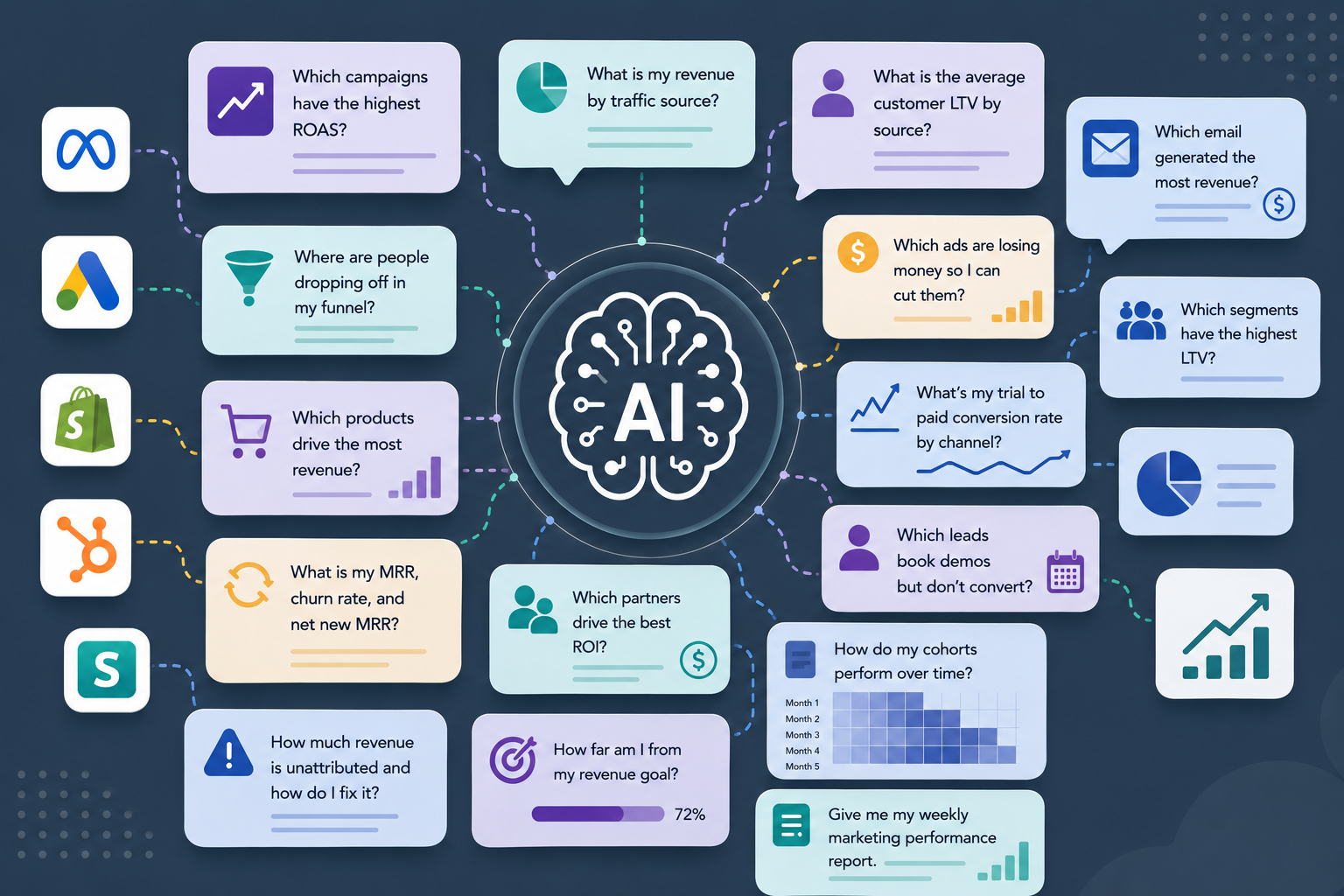
174 plug-and-play prompts for more effective AI marketing analytics. Explore your ROAS, LTV, conversion rates, churn trends, tracking issues, funnel performance and more.