
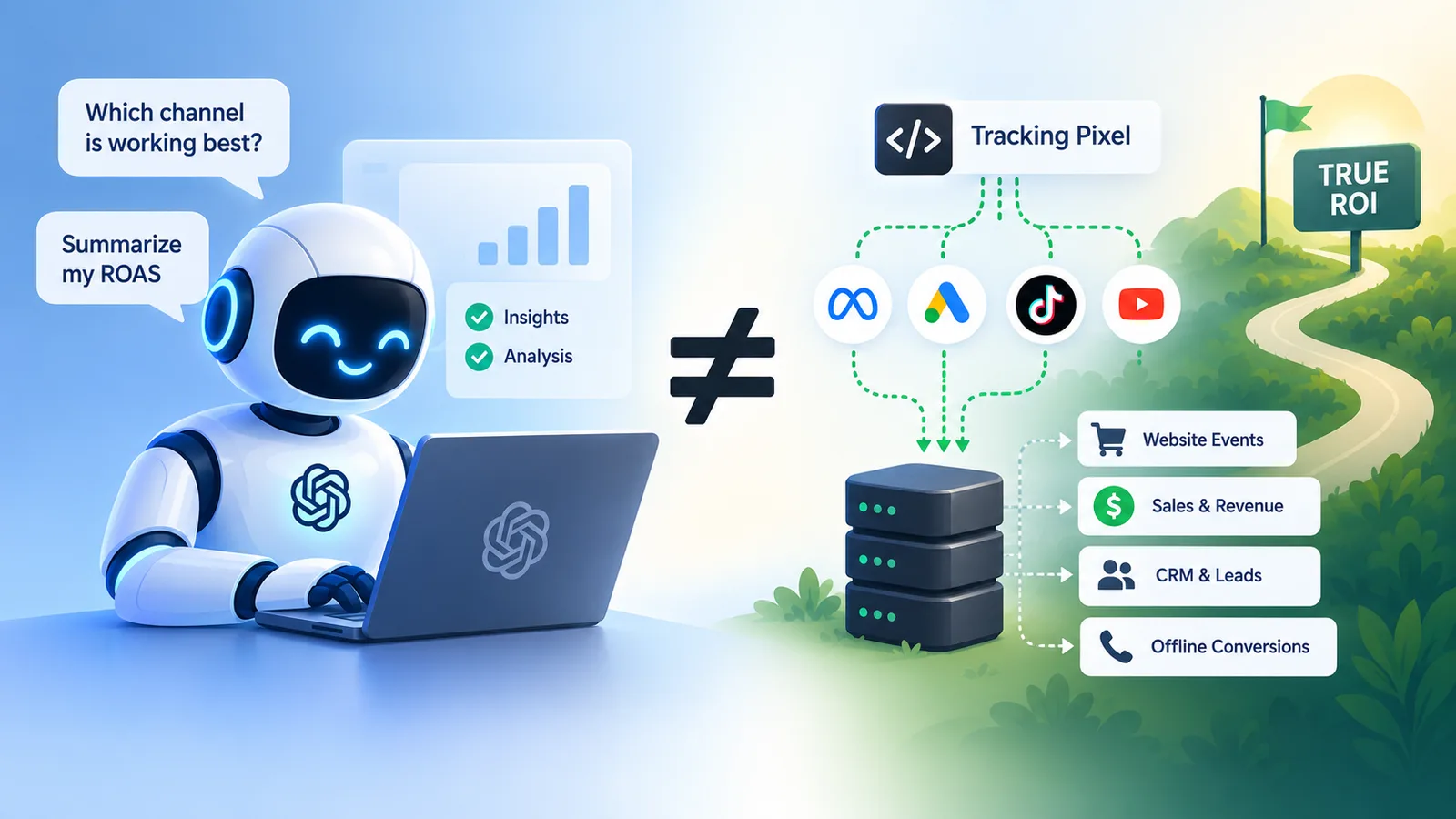
Marketing Trends, Tracking & Reporting
Can AI Replace Your Marketing Attribution Software?
AI can read your attribution data. It cannot capture it. Here's what a "pixel plus AI" tool actually replaces, and the four questions to ask before switching.

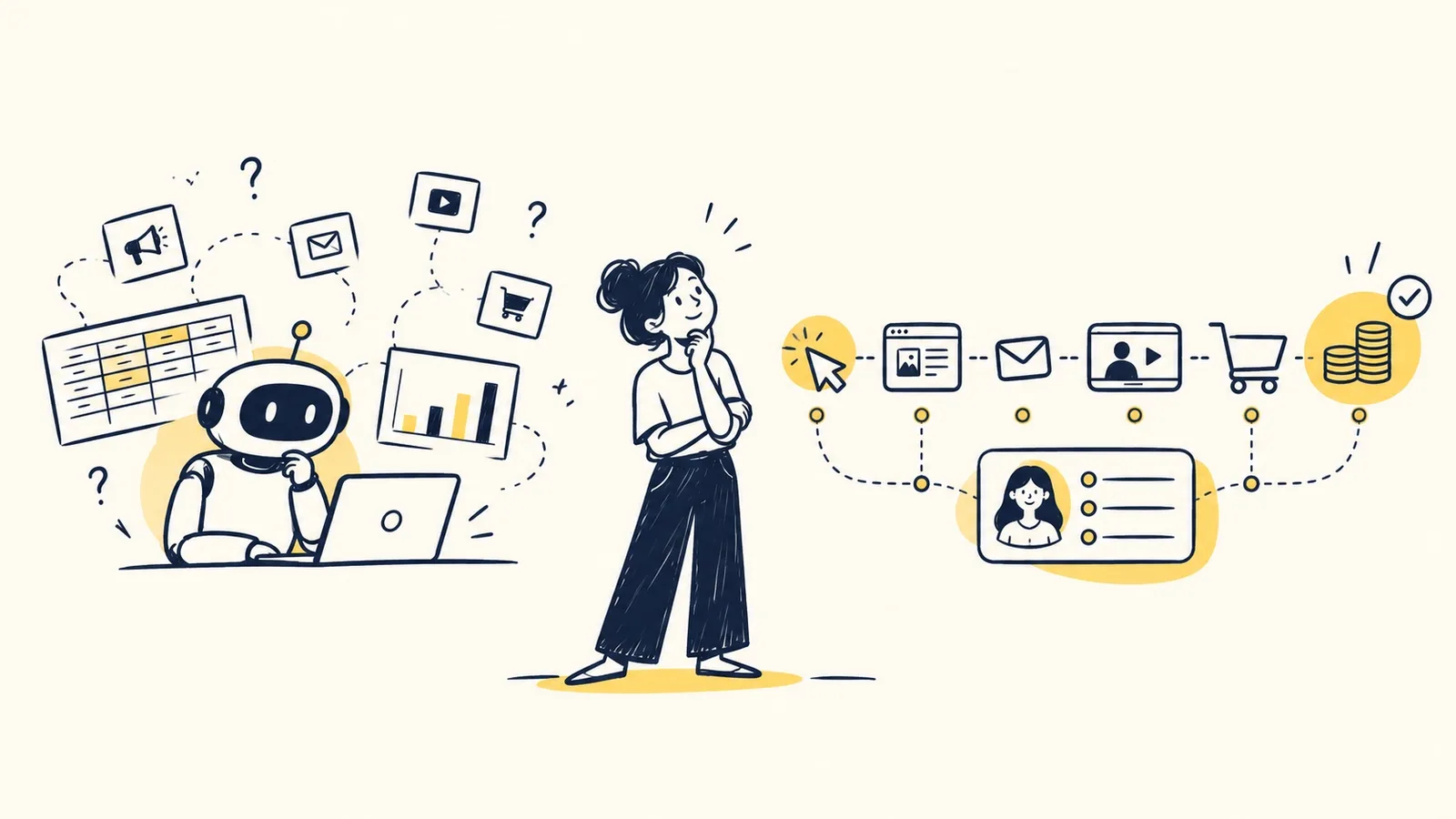
Every marketer has tried it by now. You export a spreadsheet. You drop it into ChatGPT or Claude. You ask, “Which channel drives my best customers?”
The answer comes back fast. It sounds smart. It has bullet points and percentages.
It is also probably wrong.
AI can reason about your marketing. It cannot remember the click. And without the click, there is no attribution. There is only a guess dressed up as analysis.
This article explains what AI does well, what it cannot do, and why attribution software like SegMetrics is not something AI replaces. It is something AI needs.
Attribution answers one question: what caused this sale?
To answer it, you need a record of every touch a customer made before they paid. The ad they clicked. The page they landed on. The email they opened. The webinar they watched. The day they bought.
That record has to be captured as it happens. It has to be tied to one person. And it has to connect to revenue.
Why it matters: Attribution is three jobs. Capture, connect, credit. AI does none of the first two. And it cannot do the third without them.
A language model does not sit on your website. It does not read UTM parameters. It does not see the referrer. It does not log the first page a visitor hits.
That data exists for a moment. Then it is gone unless something captures it.
Attribution software captures it. SegMetrics records the source of every lead at the moment they arrive, then keeps that record for the life of the customer.
Ask an AI to figure out where a customer came from six months later, and it has nothing to work with. It cannot go back in time. No prompt fixes a click that was never recorded.
Your customer does not live in one system.
They click a Facebook ad. They opt in through a form. They land in ActiveCampaign or Kit. They buy through Stripe or ClickFunnels. They book a call in Calendly.
Each tool knows a piece of the story. None of them knows the whole thing.
Attribution means joining those pieces into one person with one timeline. That takes direct integrations, matching logic, and a database built for it. SegMetrics does this continuously, across every connected tool, for every contact.
An AI chatbot sees whatever file you paste in. It does not have live connections to your CRM, your payment processor, and your ad accounts. It cannot match the anonymous visitor from March to the buyer in July.
The workaround is to export everything and let AI sort it out. It fails for a few reasons.
Files get big. Context windows have limits. The model reads part of your data and summarizes the rest.
Exports are lossy. Most platforms don’t export the fields you need to join records. Timestamps come in different formats. Emails don’t match. Order IDs live in one system and not the other.
Exports go stale. The data is outdated the moment you download it. You’d need to repeat the whole process every week to keep your answers current.
Attribution is not a one-time analysis. It is a running system. A chat window is not a running system.
When data is missing, a good analyst says, “I don’t know.”
A language model often doesn’t. It fills the gap with something plausible. It will give you a cost per lead, a return on ad spend, a top channel. The numbers will look real. They may have no basis in your actual data.
Limitations: In marketing, a confident guess is expensive. A made-up ROAS figure can move your budget. A wrong top channel can kill your best campaign.
Attribution software does not guess. If a sale has no tracked source, SegMetrics shows it as unattributed. That honesty is the point. You can’t fix a gap you can’t see.
Ask AI to read your Facebook and Google dashboards and it will report what those dashboards say.
The problem is that ad platforms grade their own homework. Each one tends to claim credit for the same conversion. Add up the numbers and you often “earn” more revenue than you made.
Data-Driven Insight: Say you made $50,000 in real revenue this month. Facebook reports $38,000 in conversions. Google reports $27,000. Add them up and your ad platforms claim $65,000. That’s 130% of what you actually earned. An AI reading those dashboards will take both numbers at face value.
AI has no independent record to check against. It repeats the inflated numbers.
SegMetrics tracks conversions from your side, tied to actual revenue in your payment system. One sale. One customer. Credit split by the model you choose.
Ask an AI the same question twice. You may get two different answers.
That’s fine for brainstorming. It’s a problem for reporting. Your team needs to see the same number on Monday that they saw on Friday. Your CFO needs to trust the math.
Attribution models are defined rules. First touch. Last touch. Linear. Time decay. The same inputs give the same outputs every time. That’s what makes them useful for decisions.
Here’s a typical journey for a course buyer. The names and numbers are illustrative, but the pattern is one most marketers will recognize.
Meet Sarah.
Your Stripe export shows an email, a date, and $997. Your Google Ads report claims the sale. Your Facebook report may claim it too, if the conversion falls inside its attribution window. Your email platform shows a contact with some opens.
Nothing ties these together. Ask ChatGPT which channel drove the sale, and it will likely say Google Ads. That’s the only file with a clear conversion attached.
One person. Five touches. One $997 sale.
Now you can see the real story. The Google ad didn’t create Sarah. It caught her on the way to the checkout. Facebook started the relationship. Your webinar did the selling.
Ask yourself: If you cut the Facebook campaign because “Google gets the sales,” what happens to the top of your funnel? It shuts off.
That is the gap between guessing and knowing.
| Capability | ChatGPT or Claude | SegMetrics |
|---|---|---|
| Captures clicks and UTMs live | ❌ No | ✅ Yes |
| Records original lead source | ❌ No | ✅ Yes |
| Connects one customer across your tools | ❌ No | ✅ Yes |
| Works from live, current data | ⚠️ Only if connected | ✅ Yes |
| Ties touches to actual revenue | ⚠️ Only what you upload | ✅ Yes |
| Shows unattributed sales honestly | ⚠️ May guess | ✅ Yes |
| Same question, same answer | ⚠️ Not guaranteed | ✅ Yes |
| Explains trends in plain English | ✅ Yes | ✅ Yes, via MCP |
The pattern is clear. AI is strong at interpretation. Attribution software is strong at the record. You need both, in that order: record first, then interpret.
None of this means AI is useless for marketing. It’s excellent at the parts that come after the data exists.
AI is good at spotting patterns in clean data. It is good at explaining trends in plain English. It is good at asking follow-up questions, drafting reports, and suggesting next tests.
Pro Tip: The key word is clean. AI is a great analyst. It is a terrible data collector. Give it tracked data, not exports.
The best setup is not AI or attribution. It’s AI powered by attribution.
SegMetrics captures every touch, stitches every customer, and ties it all to revenue. Then AI can work with data that is complete, current, and true.
SegMetrics makes this direct. The SegMetrics MCP server connects AI assistants like Claude to your live attribution data. You ask a question in plain English. The AI answers from your real numbers, not a stale export and not a guess.
Inside the app, SegMetrics AI Builder turns natural-language questions into reports. You describe what you want to see. It builds the report from your tracked data.
That’s the difference. AI brings the reasoning. SegMetrics brings the memory.
No. ChatGPT can analyze data you give it, but it cannot track clicks, capture lead sources, or connect customer activity across your tools. Attribution requires software that records touches as they happen.
Not likely. AI needs accurate data to give accurate answers. Attribution tools produce that data. The two work best together.
You can, but results break down fast. Exports are incomplete, go stale quickly, often lack the fields needed to match records, and large files exceed what the model can read in full. The AI may also fill gaps with invented numbers.
Each platform counts conversions using its own tracking and attribution window. When a customer touches more than one platform, each may claim the full sale. Attribution software tracks from your side, so each sale is counted once.
Connect AI to a trusted attribution source. With the SegMetrics MCP server, AI assistants can query your live attribution data directly, so answers come from real tracked revenue.
Yes. SegMetrics AI Builder uses AI to build reports from plain-language questions, and the MCP server lets AI assistants answer questions using your SegMetrics data.
AI is changing how marketers analyze results. It is not changing the need for good data.
If you want AI to tell you what’s working, first give it something true to work with. That starts with tracking every click, every lead, and every dollar.
AI can reason about your marketing. SegMetrics remembers the click.
Start your SegMetrics trial and give your AI real data to work with.
Denise Cullom is an innovative and goal-oriented Operations Lead committed to professional development and expert leadership of teams, systems, and profitability. Recognized for repeatedly surpassing business goals, she is a decisive leader and strategic planner known for rallying stakeholders behind new initiatives. Denise is adaptable to changing business needs and market conditions, continuously driving success and growth.
Marketing Trends, Tracking & Reporting
AI can read your attribution data. It cannot capture it. Here's what a "pixel plus AI" tool actually replaces, and the four questions to ask before switching.
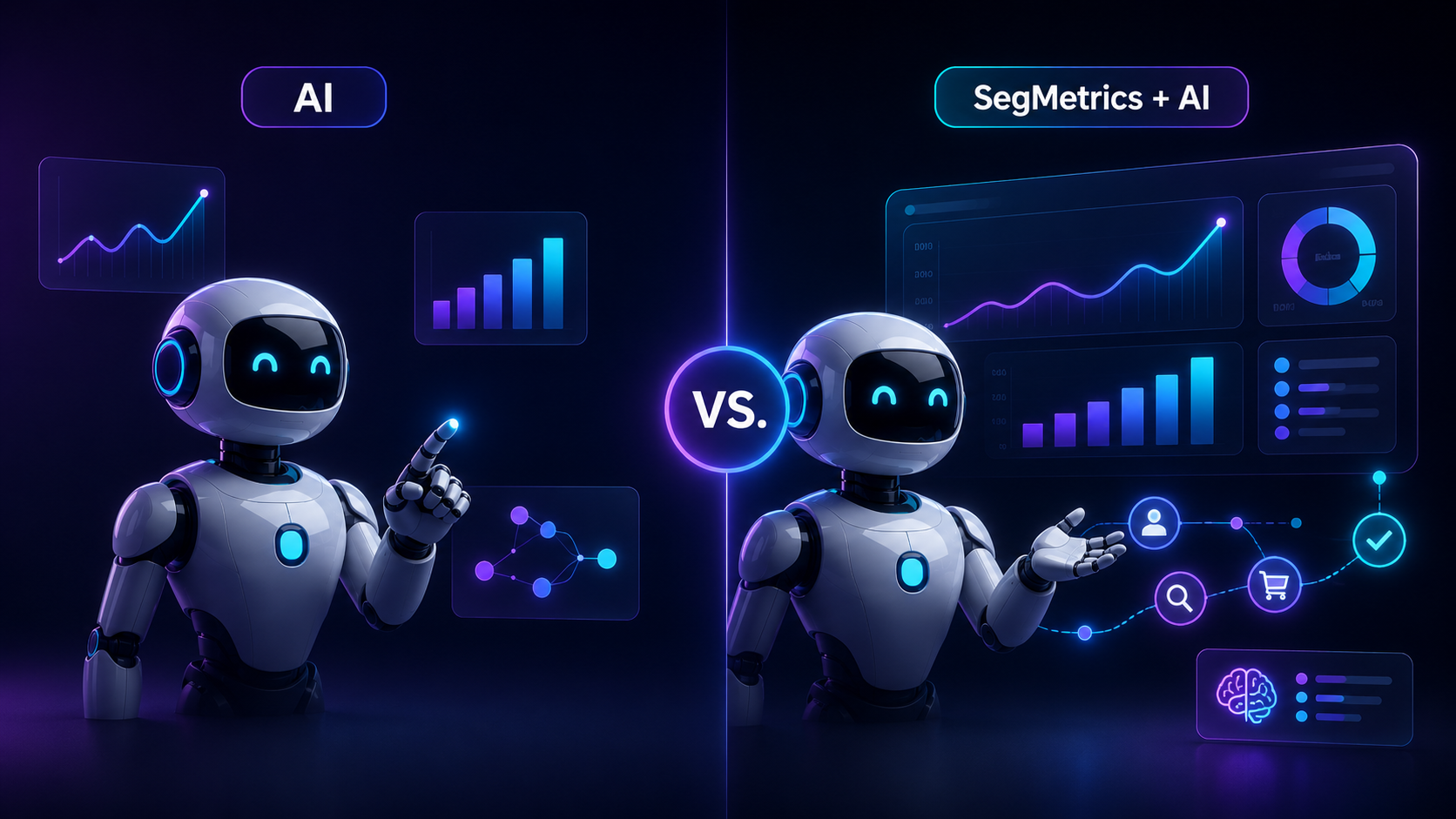
Short answer: AI can reason about marketing data. It cannot record it. So will AI marketing attribution work for me?…
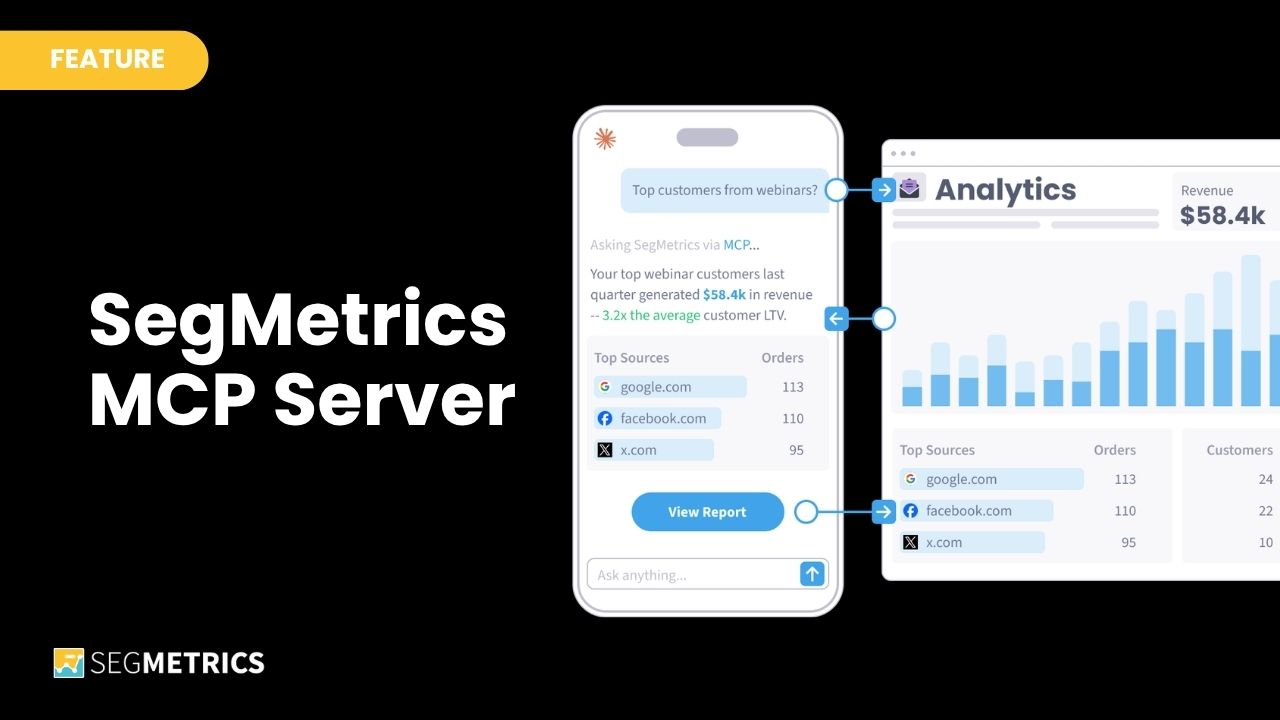
The accuracy and insight of SegMetrics is now available inside your AI tool of choice. It’s like having an advanced data analyst on call, 24/7.

Start your 14-day free trial of SegMetrics today!