

Why Use Marketing Attribution Software When AI Can Just Pull My Data?
Short answer: AI can reason about marketing data. It cannot record it. So will AI marketing attribution work for me?…

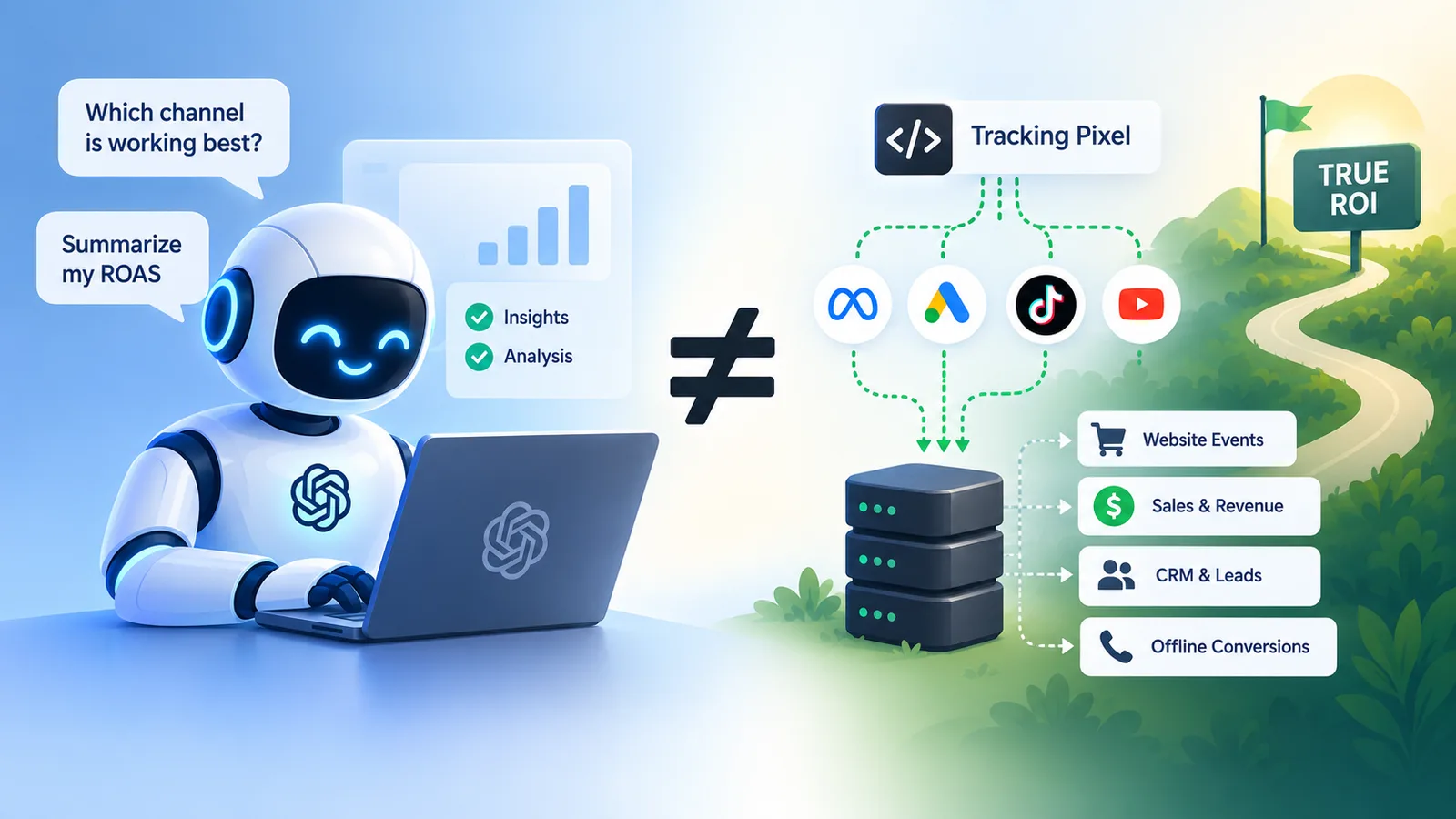
No. AI can replace the analyst reading your attribution data. It cannot replace the data itself, and a tracking pixel alone doesn’t produce it. AI can reason about your marketing. It cannot remember the click.
That answer is showing up more often because a new wave of tools is pitching exactly the opposite: buy a pixel once, let AI handle the rest, cancel your attribution subscription. It’s a compelling pitch if you’ve ever opened a dashboard and felt like you needed a data analyst just to read it. It’s also selling you half a product and calling it the whole thing.
A pixel is a script that captures visitor and conversion events on your site and forwards them to ad platforms through their conversion APIs, things like Meta’s Conversions API or Google’s Enhanced Conversions. That’s the entire job of a pixel. Every attribution platform runs one, SegMetrics included. A vendor pitching “our pixel” as the innovation is describing table stakes, not a breakthrough.
The real work happens downstream of capture, and it’s the part a pixel alone can’t do:
Why it matters: None of that is a one-time build. Browsers keep restricting third-party cookies, Safari’s tracking prevention keeps getting stricter, and ad platforms rewrite their conversion APIs on their own schedule, not yours. Every one of the 100+ integrations an attribution platform maintains is a moving target. Keeping a pixel accurate is maintenance work every quarter, indefinitely.
AI can read clean, modeled attribution data and answer “is it working” in plain language, instead of making you interpret a dashboard and a spreadsheet yourself. Ask it which channel is driving profitable customers, not just cheap leads, and a good model answers in a sentence instead of an afternoon. That’s a real and overdue advance for marketers who never wanted to become data analysts.
AI is also becoming something you have to measure, not just something you use. AI search tracking exists because buyers now arrive from ChatGPT and Perplexity, and those visits need attributing like any other channel. A tool that can’t see them is already behind.
But a model is only as good as what it reads. Fed raw, unreconciled pixel events, it will answer confidently and wrong, because it has no way to know that a click was a duplicate, that a sale later refunded, or that the “conversion” it’s citing was a $7 tripwire and not the $2,000 course sale behind it. Garbage in, fluent garbage out.
Because attribution has real recurring costs that don’t stop the day you buy: event processing at scale, data storage, and constant integration maintenance as Meta, Google, TikTok, Stripe, and every CRM change their APIs. Subscription pricing reflects that ongoing cost. It isn’t just a billing preference.
A one-time fee for a “pixel plus AI” tool usually means one of two things happened to that cost structure:
Pro Tip: Lifetime-deal pricing on infrastructure-heavy products is a familiar pattern for pre-launch tools chasing early revenue and testimonials before their real costs catch up. Some quietly move to subscription or usage fees once they leave alpha. Worth watching for, not worth being surprised by.
Best for: a single channel, a single offer, and no need to reconcile against a CRM or handle delayed conversions. In that narrow case, a lightweight pixel with an AI summary on top can be genuinely useful, and genuinely cheaper.
The pitch breaks down the moment you’re running multiple channels, multiple offers, or anything with a sales cycle longer than the click. That describes most course creators, coaches, and agencies as soon as they’re spending real money on ads. It’s also why buyers comparing Hyros alternatives or Triple Whale alternatives are usually shopping for more modeling, not less.
SegMetrics Advisor is an AI layer that reasons over attribution data already captured, deduplicated, and reconciled against actual revenue, not over a model’s best guess at your funnel. The pixel and the modeling happen first, built to survive the API changes and tracking restrictions that break lighter tools. Multi-segment analysis means the answer accounts for the fact that your cold traffic and your list behave nothing alike.
The reasoning sits on top of that foundation, not instead of it. AI can reason about your marketing. It cannot remember the click, so something has to remember it first. That’s the case for SegMetrics in one sentence.
Our guide to marketing attribution tools walks through the same criteria across the major platforms if you want the full comparison.
Recommendation: If a tool can’t answer all four clearly, it isn’t replacing your attribution platform. It’s replacing your dashboard, and charging you once for the privilege of maintaining the rest yourself.
Denise Cullom is an innovative and goal-oriented Operations Lead committed to professional development and expert leadership of teams, systems, and profitability. Recognized for repeatedly surpassing business goals, she is a decisive leader and strategic planner known for rallying stakeholders behind new initiatives. Denise is adaptable to changing business needs and market conditions, continuously driving success and growth.
Short answer: AI can reason about marketing data. It cannot record it. So will AI marketing attribution work for me?…
Why Attribution Matters More Than Ever If you’re running paid ads, email campaigns, webinars, or funnels, you already know one…
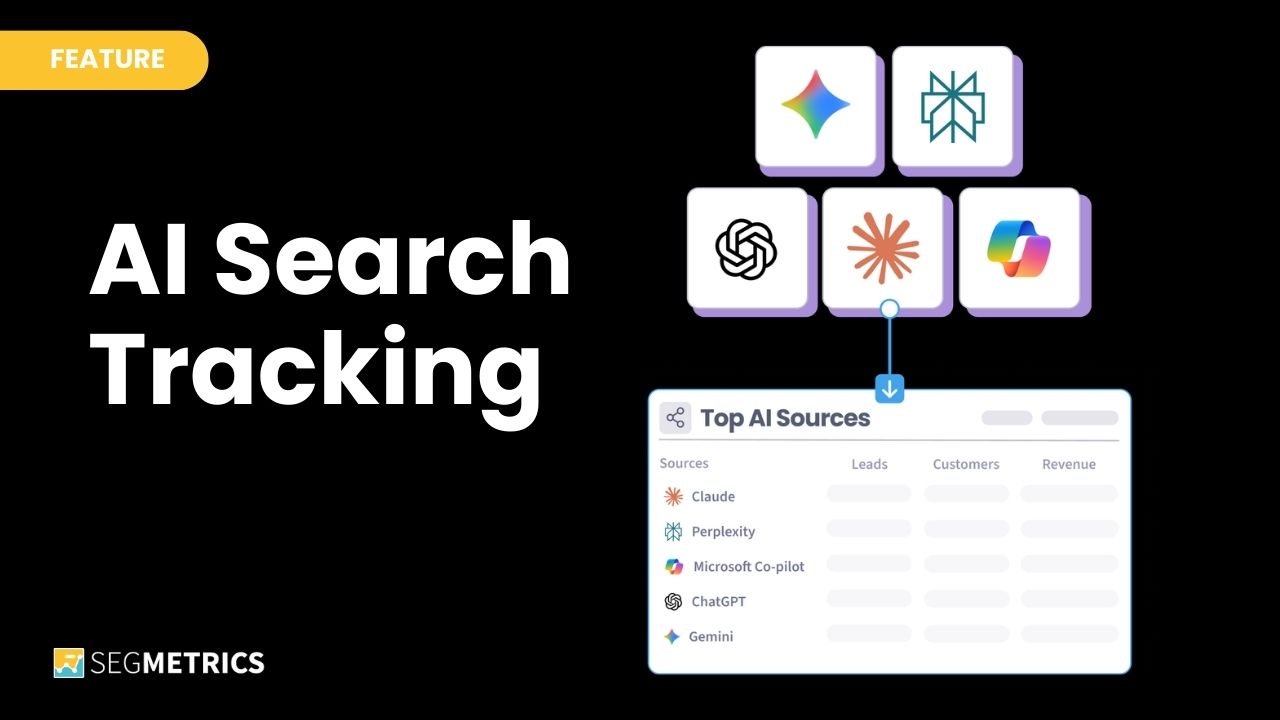
AI traffic is already shaping buyer behavior — but most analytics tools bury it in referral data. SegMetrics’ AI Search Tracking identifies AI-driven traffic and measures its true impact on leads, revenue, and lifetime value so you can make smarter, data-driven decisions.

Start your 14-day free trial of SegMetrics today!