

Why Use Marketing Attribution Software When AI Can Just Pull My Data?
Short answer: AI can reason about marketing data. It cannot record it. So will AI marketing attribution work for me?…

Articles

When it comes to marketing, the analysis of each touchpoint leading up to a purchase is essential. Funnel attribution, which, simply put, is figuring out exactly which marketing efforts lead to the final purchase, is a method most marketing agencies utilize in order to improve their future marketing strategies. The struggle in accumulating enough data to understand conversion is something even the best agencies face, especially since the use of multiple devices leads to fragmented user data.
Monitoring and analyzing device data creates the link between the user and the final conversion. This article will aim to present how understanding user behavior analytics leads to smarter decisions and a higher conversion rate.
The average U.S. household now owns 17 connected devices. Your customers don’t just switch between their phone and laptop anymore…they seamlessly flow between smartphones, tablets, desktops, smart TVs, and wearables throughout their purchase journey. Without cross-device tracking, you’re treating one customer as three different people, fragmenting your attribution data and bleeding marketing budget.
Consider this scenario: A customer sees your ad on Instagram during their morning commute (mobile), researches your product on their work laptop at lunch (desktop), compares prices on their tablet that evening (tablet), and finally completes the purchase on their phone the next day (mobile). Traditional tracking sees four separate users. Cross-device attribution sees one customer journey—and attributes value correctly.
Research reveals that 30-50% of all conversions involve multiple devices. That means half your attribution data might be completely wrong without proper device tracking. When 46% of shoppers research products on mobile but switch to desktop for purchase, single-device attribution isn’t just incomplete, it’s actively misleading your marketing strategy.
Safari’s Intelligent Tracking Prevention already limits cookies to just 7 days. Chrome’s ongoing cookie deprecation is eliminating third-party tracking entirely. By 2026, traditional cookie-based tracking will be effectively dead. Cross-device tracking using first-party data and deterministic matching isn’t just better…it’s the only sustainable path forward.
When you can’t connect device touchpoints, several critical problems emerge:
Fragmented Attribution: You’re missing 40% or more of actual conversion paths, attributing all credit to the last-click device while ignoring the discovery and research phases that happened elsewhere.
Reduced Retargeting Audiences: Unable to re-engage customers who switch devices means smaller audience pools and higher customer acquisition costs.
Poor Algorithm Training: Platforms like Meta and Google lack complete data for optimization, resulting in inefficient ad spending and lower ROAS.
Understated Channel ROI: Marketing channels appear less effective than they actually are because you can’t see their full influence across the customer journey.
Statistics from 2025 paint a clear picture:
Mobile dominates discovery and browsing, while desktop still leads slightly in conversion rates due to ease of checkout and form completion. Understanding this behavior split is essential for attribution accuracy.
Deterministic tracking uses unique identifiers like login credentials to link devices with near-perfect accuracy. When a user logs into your app on their smartphone, then later signs in via their laptop, deterministic tracking positively identifies them as the same person. SegMetrics is primarily Deterministic as we use 1st party cookies, server-side tracking and advanced lead fingerprinting which allows us to reliably identify and track your visitors across domains, devices, iOS updates, platforms, and throughout your full sales funnel.
Advantages:
Primary: Deterministic Tracking
Limitations:
Probabilistic tracking uses device signals like IP address, operating system, browser version, location data, screen resolution, and behavioral patterns, combined with statistical models to infer whether multiple devices belong to the same user.
Advantages:
Limitations:
When users see their first ad, they’re intrigued. They curiously visit a website and look at the product. However, they rarely convert on the first visit. According to recent data, the typical customer journey spans 3-5 devices before conversion. This is exactly why full-funnel attribution with device-level tracking provides better insights than first-click or last-click attribution alone.
This creates the importance of responsible tracking of user device data, through following users on each step of their journey, and assigning credits to each touchpoint becomes easier and a stronger metric of analysis. This means we must ensure that users use devices that are authentic and credible. As they use different devices and make constant shifts between their phones and their iPads, it becomes essential that they use authenticated devices. Tools such as iPad serial number lookup help users ensure that their devices are authenticated, not only bringing them ease, but further improving the credibility of the data required for completing the attribution puzzle. Without analyzing the connection between user devices, their metrics look like they are different people. This results in misleading reports.
Without analyzing connections between user devices, your metrics fragment the customer into multiple separate people, resulting in misleading reports. Device identifiers are essential to connect all the dots and completely understand one user’s journey from initial curiosity to final conversion.
The strategic value of cross-device tracking extends far beyond immediate conversion measurement. Properly implemented device attribution delivers compounding benefits:
Better Budget Allocation: When you understand which devices and touchpoints actually drive conversions—not just close them—you can invest in the full customer journey, not just bottom-funnel tactics.
Improved Forecasting: Complete journey visibility reveals patterns in customer behavior, conversion timelines, and seasonal trends that single-device data obscures.
Enhanced Customer Lifetime Value: Tracking users across devices enables better retention strategies, personalized experiences, and more accurate LTV calculations.
Sustainable Data Strategy: First-party cross-device tracking withstands privacy regulation changes and platform restrictions that undermine third-party methods.
Research shows that successful cross-device tracking typically reveals 30-50% of conversions involve multiple devices, fundamentally changing how you view marketing channel performance. Top-of-funnel campaigns that look weak in last-click attribution suddenly show their true value in driving awareness that later converts on different devices.
Measuring the important actions users take across their entire multi-device journey, conversion tracking at the device level, is essential for understanding true user behavior and optimizing accordingly.
Consider this common scenario: Mobile users browse your product catalog, add items to cart, but stop at checkout. Initial analysis would indicate conversion failure. However, 46% of these users actually complete their purchase on a desktop later, finding it easier to enter payment details and shipping information on a full keyboard.
This is where cross-device tracking proves invaluable. Instead of seeing abandoned carts, you see intentional device-switching behavior. Rather than frantically optimizing mobile checkout (which might not be the problem), you ensure cart synchronization across devices and send strategic “complete your purchase” emails that work equally well on desktop.
Traditional attribution assigns all credit to the final device or touchpoint. Cross-device attribution models distribute credit appropriately:
Multi-Touch Attribution: Credit is shared across all devices and channels based on their contribution. The Instagram ad that sparked awareness gets credit, even though the purchase happened on a desktop three days later.
Time-Decay Models: Earlier touchpoints receive decreasing credit as time passes, but aren’t ignored entirely—crucial for understanding how mobile discovery contributes to later desktop conversions.
Data-Driven Attribution: Machine learning analyzes your actual conversion paths to assign credit based on observed patterns, automatically accounting for typical cross-device behaviors in your customer base.
Without device-level tracking, marketers guess why mobile conversion rates lag desktop. With it, you see actual behavior:
These insights enable device-specific optimization rather than generic “improve mobile conversion” initiatives.
The distinction between understanding how people behave and knowing who they are has never been more important. Cross-device tracking, when implemented correctly, focuses on behavioral signals—not personal identity.
Privacy-compliant cross-device tracking analyzes:
Personal identifying information isn’t necessary for effective attribution:
Modern cross-device tracking relies on:
Consent Management: Clear opt-in mechanisms and transparency about data collection, giving users control over their participation.
First-Party Data: Information users willingly provide through account creation, preferences, and authenticated sessions.
Server-Side Tracking: Bypassing browser limitations while respecting user privacy choices and regulatory requirements.
Compliance Frameworks: GDPR, CCPA, and evolving privacy regulations shape implementation, ensuring user rights remain protected.
Research from 2025 shows that transparent privacy practices actually increase opt-in rates. When users understand the value exchange—better experiences in return for consensual data sharing—they’re willing participants rather than surveillance subjects.
High conversion numbers can hide attribution errors. When conversions get credited incorrectly across multiple devices a user employs, inflated metrics create a false sense of success.
For example, a user might see credit assigned to:
If your platform counts this as three separate conversion paths instead of one multi-device journey, your reports inflate success 3x. Quality of attribution data matters far more than volume of recorded conversions.
The purchasing process is rarely linear. Users don’t plan to start on mobile and finish on desktop—they use whatever device is available:
This device availability bias means attribution must account for opportunity and context, not just preference and intent. Users aren’t “mobile browsers who become desktop buyers” by strategy—they’re opportunistic device-switchers responding to circumstance.
Interpreting trends and patterns to guide strategy is attribution’s proper use—not treating it as immutable truth. Even the best cross-device tracking provides directional insights rather than perfect certainty.
No attribution system captures every touchpoint:
Therefore, long-term patterns across thousands of customer journeys matter more than individual conversion attribution. Cautious, informed decision-making means using attribution to identify opportunities and validate hypotheses, not as a gospel of absolute marketing truth.
Imagine attribution as connecting touchpoints in sequence. Ideally, all points connect cleanly. Reality presents gaps.
Broken Tracking Implementations: Tags fail to fire, cookies get blocked, identifiers don’t persist across sessions.
Platform Limitations: iOS privacy features, browser restrictions, and ad blocker usage create measurement gaps.
Unmeasured Interactions: Customer service calls, in-store visits, and offline touchpoints fall outside digital tracking.
Cross-Domain Issues: Subdomain transitions, payment gateway redirects, and third-party checkout systems break attribution chains.
Device-level tracking reduces these blind spots significantly:
Persistent Device IDs: First-party identifiers survive longer than third-party cookies, maintaining attribution across longer time windows.
Server-Side Tracking: Captures data before it reaches the browser, bypassing ad blockers and browser privacy restrictions.
Offline-to-Online Bridging: Mobile location data connects in-store visits to prior digital touchpoints, completing omnichannel journeys.
Cross-Domain Tracking: Advanced implementations maintain user identity across domains, platforms, and payment processors.
When marketers discover a top-performing campaign isn’t delivering expected ROAS, often an unmeasured device touchpoint exists in the blind spot. Only through comprehensive device-level review can that mystery be uncovered and attribution made more accurate.
Traditional attribution asks which channel or campaign drove the conversion. Device-aware attribution asks which touchpoints across which devices influenced the decision.
This shift focuses on context rather than just results. Instead of crediting “Google Ads” with a conversion, you understand:
Each device contributed. Each deserves appropriate credit.
The straight-path assumption—user sees ad, clicks ad, converts—rarely reflects reality. Modern attribution asks: under what circumstances do device-switching patterns emerge?
Conditional analysis reveals:
Understanding conditions enables dynamic attribution that reflects actual customer behavior rather than idealized linear journeys.
Last-click attribution gives all credit to whichever device closed the sale. Cross-device attribution recognizes contribution across the journey.
This collaborative approach acknowledges:
By asking about contribution rather than conversion, marketers avoid unfairly biasing budgets toward bottom-funnel, last-device touchpoints while starving the awareness and consideration stages that made conversion possible.
Analyze device behavior separately to build appropriate strategies:
Mobile Analysis:
Desktop Analysis:
Tablet Analysis:
Traditional funnel analysis shows drop-off points. Cross-device analysis shows device-switching points.
Example findings:
These insights transform “fix mobile checkout” into “optimize cross-device cart persistence and send strategic nudges that work on any device.”
Device-level attribution reveals where experience gaps exist:
Mobile Pain Points Often Found:
Desktop Opportunities Often Missed:
By paying attention to device-specific drop-off patterns, you locate the heart of usability problems and fix what actually matters—not what generic best practices suggest.
Cross-device attribution reveals which devices drive awareness vs. conversion, enabling smarter budget allocation:
Investment Realizations:
Strategic Adjustments:
For businesses focused on lifetime value and full-funnel revenue attribution, SegMetrics offers deterministic cross-device tracking built specifically for info-products, courses, memberships, agencies, ecommerce and SaaS companies:
First-Party Cookie & Server-Side Tracking: SegMetrics uses its own 1st-party cookies combined with server-side tracking to reliably identify visitors across domains, devices, iOS updates, and platforms, bypassing ad blockers and browser restrictions that plague third-party tracking.
Advanced Lead Fingerprinting: Deterministic matching technology tracks visitors from anonymous browsing through email capture to lifetime purchases, connecting every touchpoint with high accuracy.
Email-Based Identity Resolution: Once a visitor provides their email address (opt-in), SegMetrics creates a unified customer profile that tracks all future interactions across any device, making cross-device attribution seamless for email-first businesses.
Full-Funnel Attribution Windows:
Multi-Touch Attribution Models: Default linear attribution gives equal credit to all touchpoints, with options to filter by First Visit, Opt-in, or Purchase attribution to understand which channels drive awareness vs. conversion.
Deep CRM Integration: Native connections to email platforms (ActiveCampaign, Infusionsoft, ConvertKit, Drip) and payment processors (Stripe, PayPal) ensure revenue attribution accounts for refunds, cancellations, and subscription changes—showing profit actually kept, not just gross sales.
Why SegMetrics Excels at Cross-Device:
Best For: Course creators, membership sites, info-product businesses, coaches, agencies, and SaaS companies with email-driven funnels where LTV matters more than volume.
Meta’s server-side tracking solution addresses iOS limitations and browser restrictions:
Cross-Device Audience Building: Connects Facebook and Instagram activity across devices to build unified user profiles.
iOS 14.5+ Attribution: Maintains attribution capability despite Apple’s App Tracking Transparency restrictions.
Extended Attribution Windows: Server-side data bypasses browser cookie limitations, enabling longer attribution windows.
Event Match Quality Scoring: Shows how well your first-party data matches to Meta’s users, improving attribution accuracy.
Best For: Facebook/Instagram advertisers, mobile app marketers, e-commerce brands relying on social advertising.
Cross-Device Conversion Rate: Percentage of conversions involving multiple devices. Industry benchmark: 30-50%.
Attribution Window Coverage: How long you can reliably track users across sessions. Target: 30-90 days depending on sales cycle.
Audience Size Growth: Increase in retargeting audiences when cross-device tracking connects previously fragmented users. Expect: 25-40% growth.
Revenue Attribution Accuracy: Proper credit assignment to marketing touchpoints. Measure: variance between last-click and multi-touch models.
Effective cross-device tracking produces measurable outcomes:
As third-party tracking crumbles, first-party relationships gain primacy:
Account Creation Incentives: Offer exclusive content, saved preferences, or loyalty benefits to encourage authentication.
Progressive Profiling: Gradually collect user information across multiple interactions rather than overwhelming with forms.
Value Exchange Transparency: Clearly communicate the benefits users receive in exchange for data sharing.
Machine learning increasingly fills tracking gaps privacy restrictions create:
Predictive Matching: AI infers cross-device relationships from behavioral patterns when deterministic signals are unavailable.
Anomaly Detection: Identifies tracking issues and attribution errors automatically.
Journey Prediction: Forecasts likely device progression based on similar user patterns.
New approaches balance attribution needs with privacy requirements:
Differential Privacy: Adds mathematical noise to protect individual privacy while maintaining aggregate accuracy.
Federated Learning: Trains attribution models on devices without centralizing personal data.
Clean Rooms: Secure environments where brands and platforms can match data without exposing underlying user information.
Cross-device tracking matters because device data directly affects understanding of user behavior—the how, when, why, and what of customer purchases. By improving device-level tracking, you improve full-funnel attribution accuracy. By improving attribution accuracy, you identify the true drivers of conversion, which directly impacts return on investment.
The statistics are clear: with 17 devices per household, 59% of purchases happening on mobile, and 30-50% of conversions spanning multiple devices, single-device attribution isn’t just incomplete…it’s fundamentally broken.
Through highly accurate cross-device tracking, properly framed attribution questions, and the practical application of device insights, marketers position themselves to develop strategies that benefit both users and businesses equally. The better your cross-device data, the more informed your marketing decisions will be.
In 2026 and beyond, the winners won’t be those with the biggest marketing budgets—they’ll be those who understand the complete, multi-device customer journey and optimize for the reality of how people actually shop. Device data is no longer optional. It’s the foundation of marketing intelligence.
Denise Cullom is an innovative and goal-oriented Operations Lead committed to professional development and expert leadership of teams, systems, and profitability. Recognized for repeatedly surpassing business goals, she is a decisive leader and strategic planner known for rallying stakeholders behind new initiatives. Denise is adaptable to changing business needs and market conditions, continuously driving success and growth.
Short answer: AI can reason about marketing data. It cannot record it. So will AI marketing attribution work for me?…
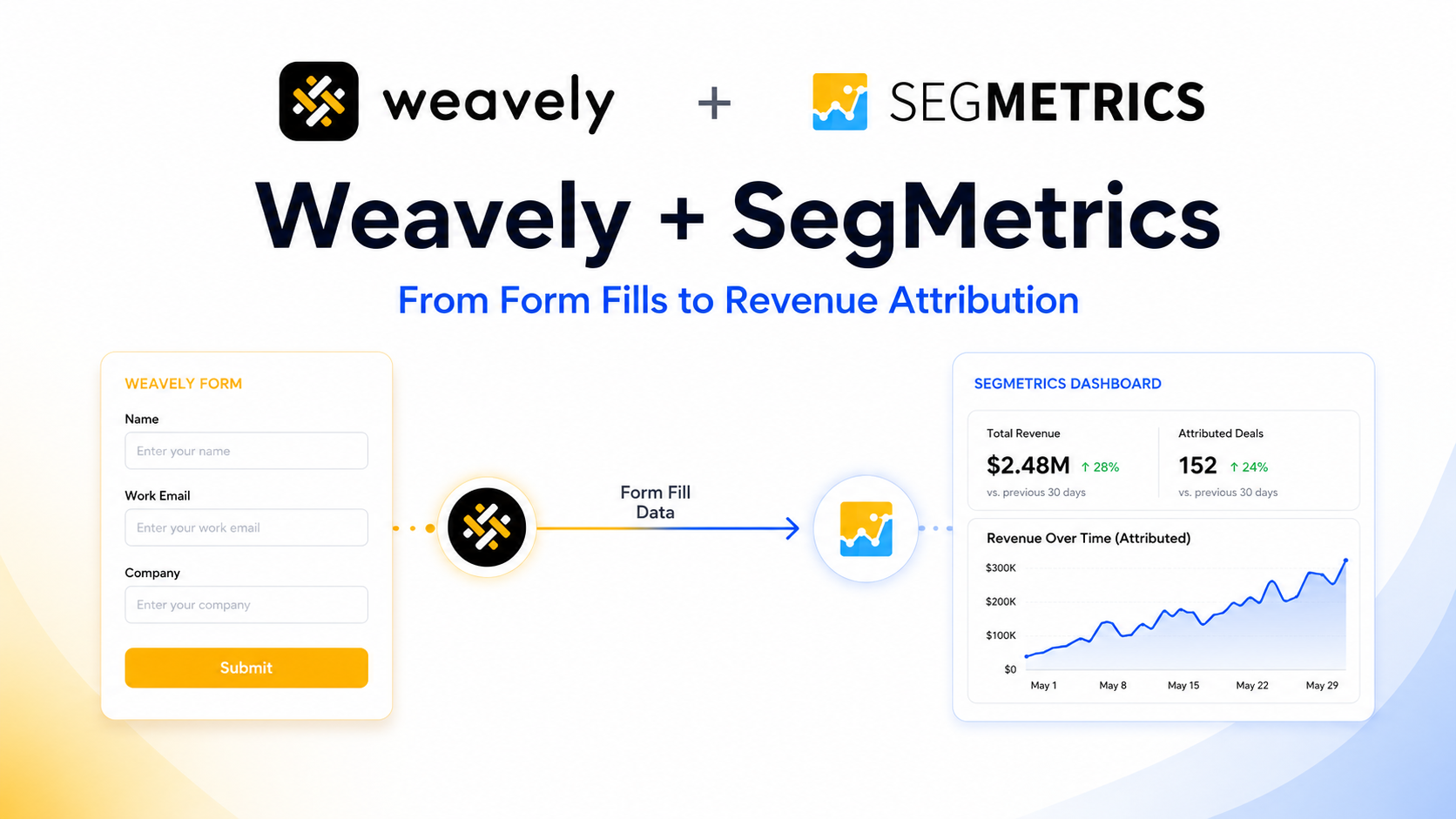
Most lead-gen forms are great at one thing: counting responses. You get a number, a spreadsheet fills up, and everyone…

What is an Alternative to SegMetrics? A Practical Guide You’re looking for a marketing analytics tool and considering your options. That’s a smart move. The…

Start your 14-day free trial of SegMetrics today!